
Genetics vs Training: What You Can and Can’t Change
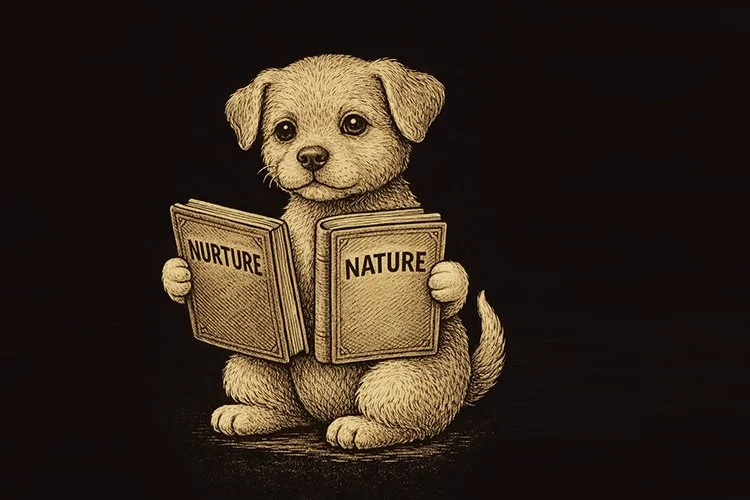
When I work with a new client, one of the first things I want to know isn't what the dog is doing wrong — it's what the dog was bred to do. Because nine times out of ten, the "problem behaviour" is just a breed trait expressing itself in the wrong context.
What I can do through training is give your dog better outlets, build impulse control, and teach them which behaviours work in your world. What I can't do — and what no trainer can do — is erase what was bred into them over generations.
The difference matters, because if you believe training can fix everything, you'll spend months blaming yourself for not cracking something that was never going to crack. If you understand what genetics actually determines, you can stop fighting your dog and start working with them.
What genetics determines
Breed traits aren't personality quirks - they're hardwired behavioural tendencies that have been selectively bred for over hundreds of years. A Border Collie naturally herds because that's what their brain is built to do. The genetic hard-wiring that makes them brilliant at moving sheep, also makes them fixate on joggers, bikes, and running children.
A Spaniel bred to hunt all day doesn't dig up your garden because it has some kind of behavioural problem - it’s doing exactly what centuries of breeding programmed them to do. Their nose is wired to detect game, their drive system rewards sustained searching, and their tolerance for repetitive tasks is extraordinarily high.
Terriers were bred to hunt and kill small prey independently, often underground where they couldn't take direction from humans. That means high prey drive, determination, and a willingness to make their own decisions. When your Jack Russell ignores recall to chase a squirrel, they're not being disobedient - they're being a terrier.
This extends beyond breed traits to individual temperament. Some dogs are born confident, some are naturally cautious. Some have high arousal thresholds, some startle easily. Some are handler-focused, some are environmentally focused. Training can work with these traits, but it can't fundamentally change them.
What training can do
Training doesn't override genetics - it gives the dog alternative outlets and teaches them which behaviours work in your environment. You can't train a Border Collie not to want to herd, but you can teach them that herding a ball or playing specific games is more rewarding than chasing children. The drive is still there, you've just redirected it.
You can't train a Spaniel not to hunt, but you can teach them where hunting is allowed (structured scent work, for example) and where it isn't. You can't train a Terrier not to have prey drive, but you can build a recall strong enough that they'll disengage from squirrels most of the time. The genetic tendency remains - training teaches impulse control and provides acceptable outlets.
This is why understanding what you've bought matters. If you chose a breed for looks without researching what they were bred to do, you've set yourself up for frustration. Training can't turn a working Cocker into a lap dog any more than it can turn a Staffie into a retriever. You're working with what the dog is, not creating what you wish they were.
What training can't do
Training can't change temperament. A naturally anxious dog can learn coping strategies and build confidence through systematic desensitisation, but they won't become a bombproof dog who's unbothered by everything. A confident, independent dog can learn to work with you, but they won't become velcro who needs constant reassurance.
Training can't eliminate drive systems. A high-prey-drive dog will always notice movement, a high-drive working breed will always need substantial mental and physical exercise, and a guardian breed will always be alert to perceived threats. You can manage these traits, teach impulse control, and provide appropriate outlets, but you can't train them away.
Training can't fix genetic health issues that affect behaviour. A dog with chronic pain will be less tolerant. A dog with poor vision may be more reactive because they can't assess threats accurately. A dog bred with poor temperament - fear, aggression, extreme anxiety - may be manageable with careful training and medication, but they won't become a stable, confident dog through training alone.
Why this matters
If you believe training can fix everything, you blame yourself when your Border Collie herds despite months of work. You assume you're failing when your Spaniel destroys another flower bed. You think you're doing something wrong when your Terrier ignores recall around prey.
You're not failing. You're trying to train against genetics, which is like trying to train a fish not to swim. It doesn't work because you're fighting what the dog fundamentally is.
Understanding genetics means you can set realistic expectations. Your Springer Spaniel probably won't be reliable off-lead in woods full of game no matter how much recall training you do - their genetics make that extraordinarily difficult. Your Staffie will probably always pull hard on lead because they were bred to pull weight - you can teach loose-lead walking, but it requires constant reinforcement because you're working against physical design.
This doesn't mean giving up on training. It means training with the dog you have, not the dog you wish you had. Work with their genetics, not against them. Provide outlets for breed traits instead of suppressing them. Manage situations where genetics make success unlikely.
The Dog's Honest Truth
Genetics determines what your dog finds rewarding, what behaviours come naturally, and what challenges you'll face. Training can shape how those traits express themselves, teach impulse control, and provide appropriate outlets, but it can't erase what was bred into the dog over generations.
If you chose a breed without researching what they were bred to do, you'll struggle. If you're trying to train your dog to be something they're not, you'll be frustrated. If you understand genetics and train accordingly, you'll make progress - but you'll also know when you need to manage rather than modify, and when good enough is actually good enough.
The Pupmeister training programmes work with what your dog is - breed traits, temperament, individual quirks - rather than trying to force them into being something they're not. If you're struggling with a puppy or teenage dog whose genetics are making training harder than you expected, get in touch any time - I'd love to have a chat.