
Dogs Aren’t Furry Humans
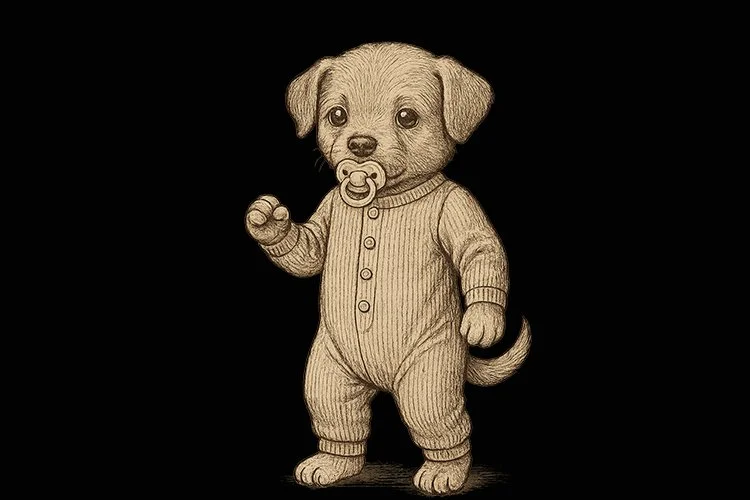
If there’s one phrase that does my head in more than most, it’s when I hear people talking about their ‘fur babies’. They’re usually the people that you see out walking dogs that look like they’ve walked out of a Burberry showroom, asking their puppies what they want for dinner.
You might think I’m being a killjoy and that it’s all a bit of harmless fun, but when you anthropomorphise dogs - project human emotions and reasoning onto them - you misread their behaviour and make training decisions that backfire.
That "guilty" look isn't guilt. That "jealousy" isn't jealousy. That "spite" isn't spite. Here's what you're really seeing, and why the distinction matters for your dog's welfare.
The fur baby phenomenon
Dogs have never had it better. Designer outfits, gourmet treats, birthday parties, Instagram accounts, dedicated Netflix shows.
I know I probably sound like an old curmudgeon, and most of it is harmless, even if it does make my stomach turn. But the problem isn't celebrating your dog - the emotional attachments we have with our dogs are very real and very important. The problem is when anthropomorphising - attributing human thoughts, emotions, and motivations to dogs - leads you to misread their behaviour and respond in ways that make problems worse.
When you interpret canine behaviour through a human emotional framework, you get the diagnosis wrong. And when the diagnosis is wrong, the treatment fails.
What anthropomorphising looks like
Here are few corkers:
"They know they've done something wrong - look at that guilty face"
Your dog destroyed the sofa while you were out. You come home, see the carnage, and your dog slinks away, ears back, head down, avoiding eye contact. Guilty, right? They know what they did.
Except they don't. That's not guilt - it's appeasement. Your dog has learned that when you come home to destruction, you get angry. They've associated your arrival with your anger, not their behaviour with your anger. The "guilty" look happens whether they destroyed the sofa five minutes ago or five hours ago, whether they did it or another dog did it. It's a response to your emotional state, not a reflection of theirs.
Just as dogs don't read your 'energy' mystically, they're not experiencing guilt - they're responding to observable signals. Dogs are experts at reading your body language; if you’re interested in reading some fascinating insights into this I’d highly recommend reading Patricia McConnell’s The Other End of the Leash.
Thinking it's guilt leads to pointless punishment - "they knew it was wrong, they need to learn consequences." But the dog doesn't connect your anger to their past behaviour. They just learn that sometimes you're scary when you come home. That's not training, it's creating anxiety.
"They're jealous of the new baby/puppy/partner"
Your dog growls when you hold the baby. Pushes between you and your partner. Guards you from other dogs. That’s jealousy, right? They're upset about the competition.
It’s actually resource guarding. You're a valuable resource - you provide food, play, comfort, security. When another being threatens access to that resource, the dog attempts to control access. It's not emotional jealousy, it's resource competition. The solution isn't reassuring them or giving them "equal attention" - it's teaching them that the presence of the baby/puppy/partner predicts good things (high-value treats, play, attention), not resource loss.
Treating it as jealousy just makes the worse - giving them extra attention when they guard just reinforces the guarding. All you’ve taught them is that guarding works.
"They're being spiteful because I left them alone"
You leave your dog alone and come home to Armageddon. They’ve peed on your bed, shredded your favourite shoes, knocked everything off the counter. They're punishing you for leaving them alone.
Except dogs don't think that way. They’re not getting their revenge. What you're seeing is anxiety (separation distress leading to destructive coping behaviours), boredom (under-stimulation leading to self-directed activity), or opportunism (you're not here to supervise, and shredding things is fun).
Treating it as spite leads to punishment - "they need to learn they can't do that." But punishment doesn't address the underlying cause. If it's anxiety, you've made it worse. If it's boredom, you haven't solved the energy problem. If it's opportunism, you haven't managed the environment.
"They're being stubborn/defiant"
You call your dog, they ignore you. You ask for a sit, they look blankly at you. You give a command, they do something else. They're being stubborn. Defiant. Disrespectful. This misdiagnosis is similar to pack leader myths that misinterpret normal behaviour as status-seeking.
Dogs don't have a concept of defiance. If they're not responding, it's because: (a) they don't understand what you want, (b) the distraction is higher value than your reinforcement, (c) they're stressed or overstimulated, or (d) you've poisoned the cue through inconsistent training.
Treating it as stubbornness leads to escalating corrections - "they know what I want, they're choosing not to comply." But if the dog genuinely doesn't understand or can't perform the behaviour in that context, punishment just creates confusion and damages your relationship.
Why we do it
Anthropomorphising is natural. Humans are wired to see intention and emotion everywhere - it's how we navigate social relationships. We read faces, interpret behaviour, infer motivation. It works brilliantly with other humans. With dogs, it creates a false map.
We also like the idea that our dogs are little people in fur coats. It makes the relationship feel reciprocal, meaningful, emotionally rich. "My dog loves me" is more satisfying than "my dog has formed a secure attachment bond with me as their primary resource provider and source of safety."
But dogs aren't people. They're dogs. They have emotional lives, social bonds, preferences, personalities - but they don't think like humans. They don't plan revenge, feel guilty about past actions, or reason through moral dilemmas. They live in the present, learn through consequences, and operate on drive, genetics, and conditioning.
When you interpret their behaviour through a human lens, you miss what they're actually communicating - and you respond to problems you've invented instead of problems that exist.
What to do instead
See behaviour, not intention - your dog destroyed the sofa. That's the behaviour. Don't invent a motivation (spite, guilt, jealousy) and respond to that. Address the behaviour: was it anxiety? Boredom? Lack of training? Solve the actual problem.
Learn canine communication - dogs communicate constantly through body language. Whale eye (showing the whites of their eyes), lip licking, yawning, turning away, freezing, stiffening - these are stress signals, not human emotions. Learn to read what your dog is actually telling you. Here’s a fantastic selection of charts you I came across online and which you can download using this link, which should go a long way to helping you understand what the outward signals your dog is giving off are saying about their emotional state.
Think consequences, not emotions - dogs learn through reinforcement and punishment (in the behavioural sense - consequences that increase or decrease behaviour). This is the foundation of ethical, evidence-based training. If your dog is "being stubborn," ask: what's reinforcing the behaviour they're doing instead? What's making your cue less valuable than the distraction?
Respect their species - dogs aren't broken humans. They're successful dogs. They have different needs, different drives, different ways of experiencing the world. Dogs don’t need a birthday parties, they need exercise, mental stimulation, clear communication, and training that works with their biology.
The Dog’s Honest Truth
Your dog isn't a furry human. They're not plotting revenge, feeling guilty, or judging your life choices. They're a dog - experiencing the world through scent, driven by genetics and conditioning, living in the present.
That doesn't make the relationship less meaningful. It makes it different. You can love your dog without pretending they're a small person. You can celebrate them without projecting human emotions onto them.
And when you stop anthropomorphising, you start actually seeing your dog - what they're communicating, what they need, what they're capable of. That's when training starts to work. Understanding how puppies actually develop helps you avoid anthropomorphising from day one.
Your dog doesn't need you to treat them like a human. They need you to understand they're a dog.