
Your 6-Month-Old Dog is Suddenly Ignoring Recall: What's Happening
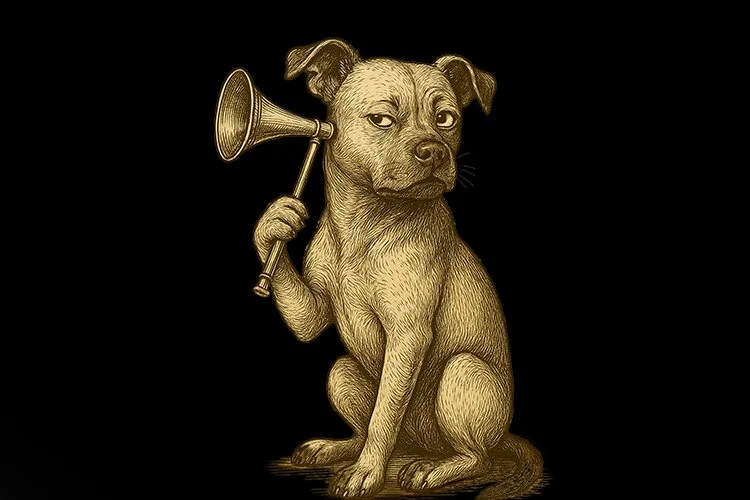
I see this pattern so often it's become predictable. Last month, a client booked in because their six-month-old Sprocker's recall had suddenly fallen apart. At four months, she had been remarkable - consistently reliable recall (whatever people tell you, ‘guaranteed’ recall is rare) in all sorts of distracting environments.
Then, seemingly overnight, it vanished. Now the dog was ignoring them completely - chasing every dog in sight, disappearing into undergrowth, acting like she had never heard her name. This is the time to get back on the long line and go back to basics.
It’s understandable that owners get frustrated when they’ve done everything right in the early days and they feel they’re starting from scratch. But if you find yourself in the same situation, don’t give yourself a hard time. The training is still there - what's changed is the dog's capacity to execute it. For now.
Why recall fails at six months
At around six months, adolescence begins. This isn't a behavioural phase you can train through- it's neurological development. Your dog's brain is physically changing, and one of the side effects is that previously reliable behaviours suddenly aren't.
Prefrontal cortex goes offline
The prefrontal cortex handles impulse control and decision-making. In adolescent dogs (roughly 6-18 months, depending on breed), this part of the brain is under construction. Neural pathways are being pruned and reorganised. The result: your dog's ability to resist temptation plummets.
Recall relies on impulse control. The dog sees something interesting and has to override the urge to chase it, choosing to come back to you instead. When the prefrontal cortex has gone offline, that override mechanism doesn't work. This is why recall trained at 12 weeks can vanish by seven months. It's not that they've forgotten. The brain structure required is fundamentally changing.
Competing motivations intensify
Adolescence brings hormonal changes that shift what dogs find rewarding. Sexual maturity begins (even if they're neutered - the hormones still fluctuate during this period). Social drive increases - other dogs become far more interesting than they were at three months. Prey drive intensifies- that squirrel isn't just interesting anymore, it's magnetic.
You trained recall when your puppy's strongest motivation was staying close to you for safety. You trained recall during the critical socialisation period when your puppy's strongest motivation was staying close to you for safety. Now their strongest motivation is investigating every dog, person, smell, and movement within a hundred metres.
Your recall cue may still work in low-distraction environments, but introduce other dogs, novel smells, or fast-moving objects, and the competing motivation overwhelms the training. The behaviour hasn't disappeared; it's just been outbid.
Fear periods destabilise confidence
Most dogs experience a second fear period around six to nine months. New things that wouldn't have bothered them before suddenly seem threatening. Familiar places feel unpredictable. The confident puppy who explored everywhere now hangs back, hyper-vigilant.
When a dog is anxious, recall becomes harder. Coming to you means leaving the thing they're monitoring. If they're keeping an eye on another dog because they're not sure if it's safe, asking them to turn their back and run towards you is asking them to ignore a potential threat.
Fear periods are temporary - but while they're happening, don't expect reliable recall. Manage the environment, keep them on a long line, and don't punish them for failing. The confidence returns, and so does the recall.
The novelty of training wears off
At three months, training was new and interesting. Coming when called earned treats, attention, games - high-value rewards. By six months, they've done this hundreds of times. The novelty has worn off. Unless you've been varying the rewards and keeping the game interesting, recall has become boring.
This is fixable - but it requires recognising that what worked at three months won't work at seven. Adolescent dogs need higher-value rewards, more varied reinforcement, and training that feels like a game, not a chore.
Why common recall fixes fail
Increasing the reward
You switch from kibble to chicken. Then from chicken to cheese. Then from cheese to hot dogs. For a week, it works. Then it stops working again.
High-value treats help - but they're not the solution. If the competing motivation (other dogs, prey, exploration) is more rewarding than food, you've just created a dog who ignores recall unless you're holding something really good. You've raised the bribe without addressing the problem: their impulse control is compromised and the environment is more interesting than you are.
If your dog is motivated by play, try that as a reward instead - when we’re training indoors, my Staffie is super food-motivated, but outside a game of tug will win every time. Whatever you do, you have to be the most exciting thing in whatever environment - it might take a bit of experimentation, but it will strongly increase your chances of a reliable recall when you get it right.
Training more often
Just upping the ante on the amount of training you’re doing doesn't address the neurological limitation. You can teach a teenager to drive perfectly on an empty road, but that doesn't mean they'll drive well in traffic. Drilling recall in low-distraction environments just makes them better at recall in low-distraction environments. It doesn't generalise elsewhere.
Using a long line indefinitely
Long lines are essential management tools during adolescence. But if that's all you do, you're not building recall - you're preventing the problem without teaching the solution. The long line buys you time. Use that time to rebuild the skill at their current developmental capacity.
Punishing the failure
You call them, they ignore you, you march over and tell them off. Or you call them, they eventually come (five minutes later, after chasing three dogs and rolling in something repellent), and you clip the lead on with a frustrated "bad dog."
Never punish an unsuccessful recall. The dog learns: when you call me and I come to you, something unpleasant happens. Next time you call, they'll be even less likely to come - because coming to you has become aversive. You've made the problem worse.
The moment they turn towards you, that behaviour needs to be reinforced. Otherwise, you're training them to stay away. And although it might sound counter intuitive, rather than walking towards them to get them back - try walking away. In dog body language that’s a signal to follow - especially if you make it fun and turn it itno a game of chase.
Some pointers to address the issue:
Rebuild the foundation, not the cue
Repeating the cue louder or more often doesn't help. Rebuild the skill from scratch at their current developmental level.
Start in the garden (low distraction). Call once. If they come immediately, jackpot reward - multiple treats, huge praise, release back to what they were doing. The reward for coming is getting to leave again. This is critical. If recall always means the end of fun, they'll avoid it.
Gradually increase distractions: someone walking past the garden, then a familiar dog at a distance, then a novel environment. Build slowly. If they fail three times in a row, you've progressed too fast - drop back to the previous level of difficulty.
Don't use the recall cue unless you're 90% confident they'll succeed. If you're not sure, use the long line or move closer before calling. Every failed recall weakens the behaviour. Every successful recall strengthens it.
Use a release cue religiously
Teach a release cue: "okay" or "go play" or "free." When you call your dog and they come to you, give them a treat, then release them back to what they were doing. Recall doesn't mean the end of freedom - it means check in, get paid, continue.
This is the most underutilised recall technique. Dogs avoid coming back because they've learnt it ends the walk. If recall means "briefly interrupt what you're doing, get a reward, then go back to playing," they'll do it willingly.
As with all training - rinse and repeat. Remember that dogs learn through repetition and reward and this take time Each time, reward and release. The final recall - the one that ends the walk - should look identical to the others. Don't make it obvious which one means "going home."
Manage arousal states
An overstimulated dog can't respond to recall. Their brain is in fight-or-flight mode, flooded with cortisol and adrenaline. No amount of training will work - they're not capable of thinking.
If your dog is sprinting in circles, barking frantically, or fixated on something, don't call them. They won't hear you, and you'll just poison the cue. Instead, move towards them calmly, get close enough to clip the long line, and remove them from the situation. Let them decompress before trying recall again.
Adolescent dogs have terrible arousal regulation. They go from 0 to 60 in seconds and can't bring themselves back down. Recall training has to account for this. Don't set them up to fail by calling when they're over-threshold.
Accept the timeline
Recall doesn't reliably return until 18-24 months in many dogs - later in some breeds. That's not because training failed. That's because the prefrontal cortex isn't fully developed until then.
You can maintain the skill and prevent it from deteriorating further, but you can't force maturity. Your seven-month-old's recall will never be as good as an 18-month-old's, regardless of how much you train. The brain development has to happen first.
This means long lines, careful environment management, and realistic expectations. You're not failing as an owner. Your dog isn't being stubborn. You're both waiting for their brain to finish developing.
The Dog's Honest Truth
Your six-month-old isn't ignoring you out of spite or stupidity. They're experiencing significant neurological changes that temporarily dismantle the impulse control required for reliable recall. The training is still there - it's the capacity to execute it that's compromised.
This phase is frustrating, especially if you've put significant effort into early training. But it's temporary. The recall comes back - usually stronger than before, because the dog has had months of reinforcement history and now has the brain development to support it.
In the meantime: long lines, high-value rewards, games that make you more interesting than the environment, and ruthless management of situations where they're likely to fail. You can't train your way out of adolescence, but you can prevent the behaviour from deteriorating while their brain finishes rewiring itself.
The teenage dog phase is rough. If you're in Brighton and need help navigating it, that's exactly what the teenage dog training programme is designed for. Not fixing "bad behaviour" - supporting dogs (and their people) through a developmental stage that's rarely given the attention it deserves.