
The First Few Weeks Aren’t About Training
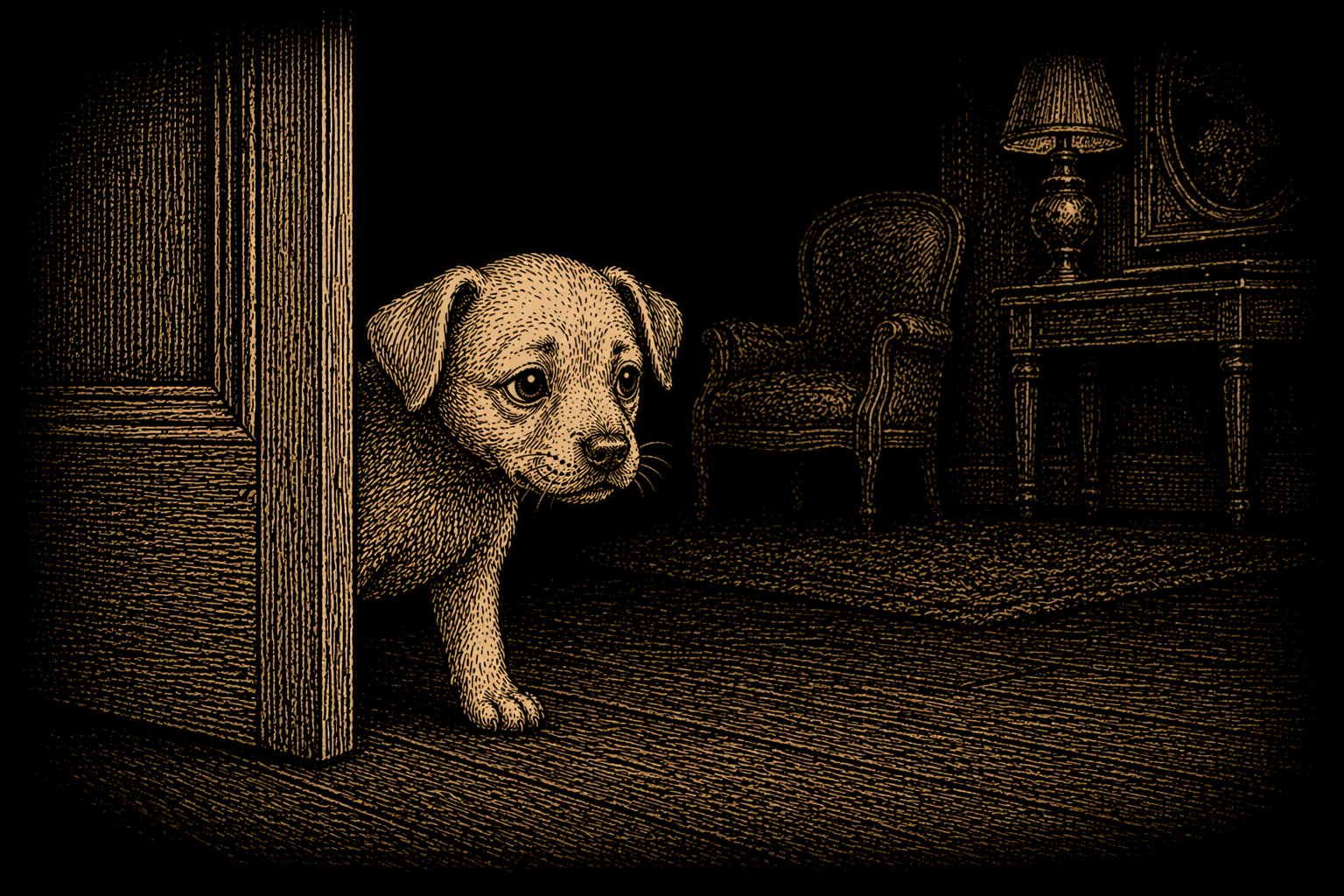
You’ll often hear that you can start training at 8 weeks, the age that many puppies start out their new lives in their new homes. And that’s true, but we’re not necessarily talking about obedience training here.
Some of the most significant learning that happens in those first few weeks isn't happening in training sessions. It's happening all the time, in the background, in the way your puppy is quietly building a picture of who you are and whether this new world is safe.
Get that right, and everything that follows is easier. Rush past it in pursuit of a perfect sit, and you've skipped the foundation that the sit - and everything else - rests on.
Understanding the early days
Your puppy has just left their mother, their littermates, and the only environment they have ever known. Even a bold, confident puppy is processing a significant amount in those first days. The world is entirely new. The smells are different, the sounds are different, the people are different. They don't know yet that you're coming back when you leave the room.
What they are learning in those first weeks - whether you intend to teach it or not - is whether this place is safe, whether you are reliable, and whether being near you produces good things. That learning is happening constantly, not just in the moments you've designated as training time.
A puppy who learns early that you are the source of calm, of food, of play, of comfort is that puppy has a reason to orient toward you when you start obedience training (I generally recommend around 12 weeks). They check in on walks because checking in has always paid off. They come back on recall because coming back to you has always been worth it. They settle when you ask them to because they trust that you'll be there when they wake up.
The first weeks are about building a relationship - that’s the foundation for all successful training.
What’s the rush?
There is enormous pressure, much of it unspoken, to have a puppy performing from day one. People share videos of eight-week-old dogs doing perfect sits and down-stays - social media is full of week-by-week milestone guides that imply your puppy should be doing X by Y weeks or something has gone wrong.
The result is that a lot of owners arrive home with a new puppy and immediately start trying to teach things, when what their puppy actually needs is to decompress.
Those first three to five days should be quiet. Small world, limited visitors, no big adventures. Not because puppies can't handle stimulation, but because a puppy who is given time to settle into their new environment before the demands begin is a puppy who feels secure. And a puppy who feels secure learns better, bonds faster, and causes fewer problems in the long run.
This is the thing I wish more people understood: slowing down in the first week is not falling behind. It is getting ahead.
Learning vs. training
This is a distinction that matters. The type of learning that shapes a dog's character and their relationship with you is not confined to training sessions. It's happening every time you interact with your puppy, and every time you don't.
When you go to your puppy calmly when they're unsettled, they learn you're reliable. When you let them explore at their own pace rather than pushing them toward things, they learn the world is manageable. When you sit on the floor and let them investigate you, they learn you're safe. When you enforce nap times even when they seem full of energy, they learn that the routine is predictable. None of this looks like training. All of it is.
The sit can wait. The recall can wait. The wait can wait! What can't wait - because it's happening whether you're conscious of it or not - is the picture your puppy is building of you and of their new world. Be deliberate about what picture you're creating.
Building solid foundations
When I talk about Foundation Training, I don't just mean teaching a sit. I mean laying the groundwork on which everything else will be built: a puppy who is comfortable in their crate, who is beginning to understand their name means something worth responding to, who has started to learn that good things come from checking in with you. A puppy who is sleeping properly, eating well, and beginning to feel settled in their new home.
That is a trained puppy. Not because they can perform behaviours on cue, but because the conditions for learning are in place. The relationship is there. The trust is there. The security is there.
Everything else - the cues, the recall, the loose lead, the stay - is built on top of that. And it builds faster and more durably when the foundation is solid than when you've tried to skip ahead.
If you want to know what the practical version of this looks like week by week, I've written a companion piece that covers the first four weeks in more detail. But the thought to hold onto before you get to any of that is this: your puppy is learning from the moment they arrive. Make sure what they're learning is that you're worth paying attention to.
The Dog’s Honest Truth
There's no such thing as a puppy who's too young to learn. But there is such a thing as rushing the wrong things while neglecting the right ones. The owners who arrive to training sessions with the most biddable, connected, responsive puppies are almost never the ones who started drilling behaviours from day one. They're the ones who spent those first weeks just being present with their puppy - calm, consistent, and engaged.