
The Power of Play
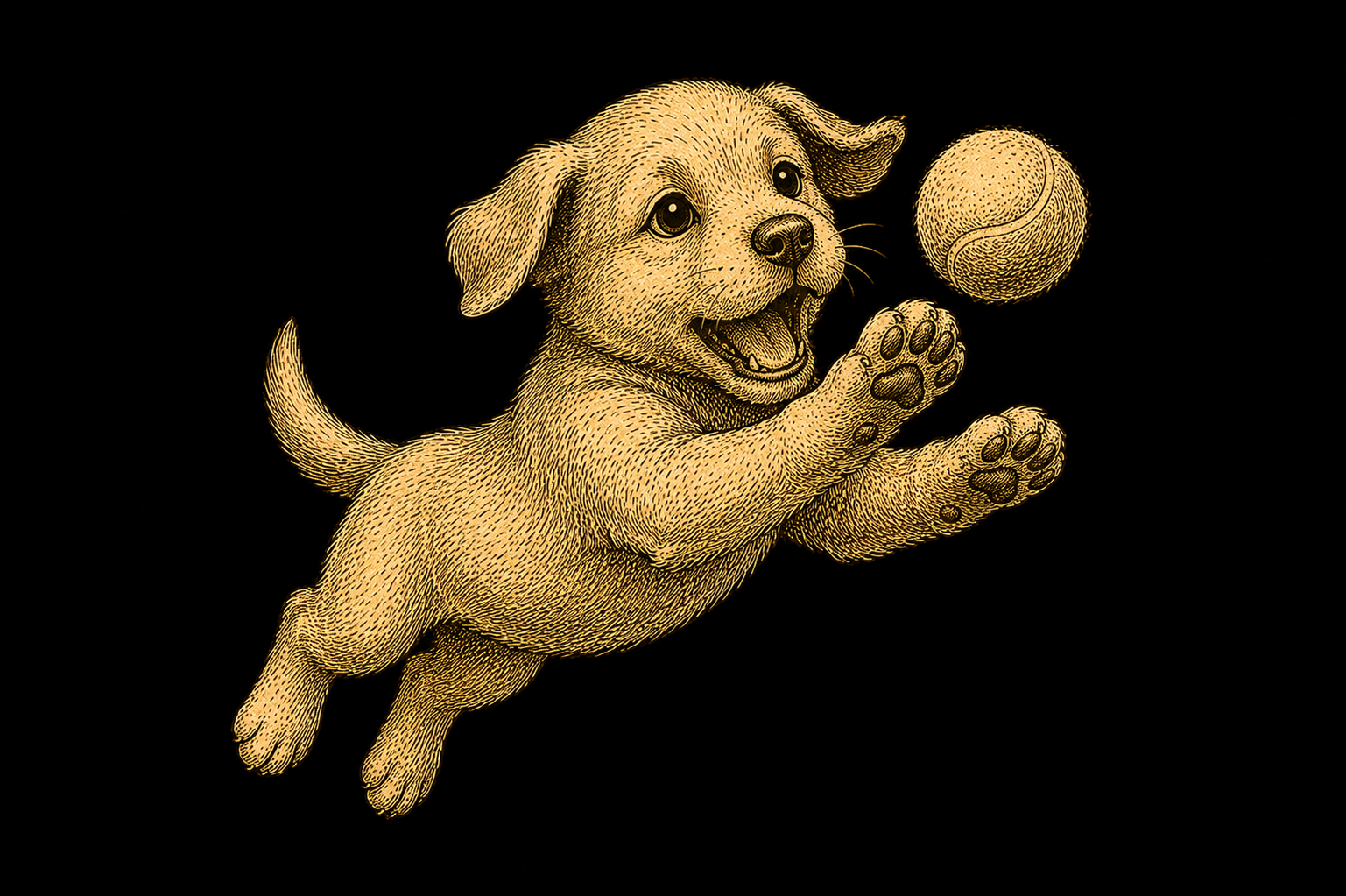
It’s such a common sight: owner and dog, out for a walk, the owner with AirPods in, phone in hand, occasionally lobbing a ball with a chucker while the dog sprints after it and back, after it and back, after it and back. The dog is getting exercise. The owner is getting the News.
I'm not saying this to be harsh. People are busy, walks are supposed to be relaxing, and a tired dog is easier to live with. But if you got a dog because you wanted a relationship with an animal, and your daily interaction consists of throwing a ball in their general direction while you listen to something else, you’re falling short.
Play is not a nice extra. It is one of the primary ways dogs communicate, bond, learn, and make sense of the world. And the quality of play between a dog and their owner is one of the most reliable indicators I know of how that relationship is actually going.
The meaning of play
Play in dogs is not just about fun - it’s is a complex social behaviour with its own rules, signals, and functions. Dogs use play to rehearse skills, negotiate relationships, test boundaries, and regulate arousal. When two dogs play well together, they are constantly reading each other, adjusting, offering signals, checking in. It is a sophisticated social exchange.
The same is true when a dog plays with a human, except that the human is usually much less good at it. Dogs are reading you constantly during play. They notice whether you are present or distracted, whether you are matching their energy or going through the motions, whether the game has structure or is just noise. A dog whose owner genuinely plays with them knows things about that person that no amount of obedience training communicates: that you are fun, that you are attentive, that being near you produces good things.
That knowledge transfers. The dog who has a rich play relationship with their owner is not the same dog in training, on a walk, or in a new environment. They check in more. They are more responsive. They are more willing to engage when things get difficult. Play builds a currency that you spend everywhere else.
The problem with ball chuckers
There is nothing wrong with fetch. Dogs who love to retrieve are getting something genuinely satisfying from it, and a good retrieve session has real value. The problem isn't the ball. The problem is what the ball chucker does to the interaction.
When you use a ball chucker, you remove yourself from the game. The dog chases the ball, not you. The dog catches the ball, not you. The dog brings it back to the chucker, not to you. You are a launching mechanism. The relationship between dog and owner in that transaction is approximately zero. You might as well have set up an automated ball machine and gone home.
Compare that to a game of tug, or a chase game, or even a basic retrieve where you throw the ball yourself, move around, make yourself part of what's exciting. The dog is now interacting with you. You are the source of the fun, not just the operator of the equipment.
The ball chucker also tends to produce a specific kind of dog over time: one who is obsessively focused on the ball rather than on their owner, who struggles to disengage when the ball is out, who has learned that the most exciting thing in any environment is the object rather than the person. That is the opposite of what good training is trying to build.
Why get a dog if you're not going to engage with it?
This is a question I find myself thinking fairly often: if your vision of dog ownership is an animal that lives in your house, gets walked twice a day while you listen to a podcast, you might want to revisit whether a dog is the right choice.
Dogs are not low-maintenance companions who slot into the background of your life. They are social animals who need interaction, engagement, and relationship. Not just exercise. Not just food and shelter. Actual engagement with the people they live with.
The dogs I see who are struggling most are rarely struggling because of bad training or difficult temperaments. They are struggling because they are bored and disconnected. They have learned that the humans in their life are essentially furniture that occasionally attaches a lead. They have no relationship to draw on when things get hard, no reason to orient toward their owner in a distracting environment, no history of genuine interaction to fall back on.
Play is the most direct route to that relationship. Not training sessions, not obedience work, not long walks. Play. Unstructured, joyful, mutual engagement where both parties are genuinely present and both parties are having a good time.
What good play looks like
Good play is interactive. You are in it, not observing it. You move, you react, you surprise the dog, you let the dog surprise you. You read what they're offering and respond to it. You notice when they're getting tired or overwhelmed and you adjust.
Good play has some structure without being rigid. There are rules - the dog learns that teeth on skin ends the game, that dropping the toy restarts it, that certain behaviours produce the game and others don't. It's about the dog understanding how the interaction works, which makes it more satisfying for both of you.
Good play is appropriate to the dog. A high-drive Spaniel needs something different from a laid-back Bulldog. A puppy needs something different from a dog in adolescence. Reading what your dog actually enjoys, rather than imposing the game you've decided they should like, is the difference between play that builds the relationship and play that goes through the motions. Some dogs love tug. Some prefer chase games. Some want you to hide and be found. Find what lights your dog up and do that.
Good play involves you being present. Not half-present while you check your phone or think about dinner. Actually present, watching the dog, responding to them, making them feel like the most interesting thing in your world for ten minutes. Dogs notice the difference immediately. So, over time, will you.
Play and training
I want to be clear that this post isn't about play as a training technique, though I've written about that separately in the context of using prey drive in training. This is about something more fundamental: the relationship that play builds, and why that relationship makes everything else easier.
A dog who has a strong play relationship with their owner has a reason to stay close on walks, a reason to come back on recall, a reason to work through something difficult in a training session. The relationship is the foundation. Play is one of the most reliable ways to build it.
It also makes training more enjoyable for everyone involved. The dogs who are most rewarding to work with are not the ones who comply out of habit or because they have no other option. They are the ones who are genuinely engaged, who find the interaction with their owner intrinsically motivating, who bring energy and enthusiasm to the work. That doesn't happen by accident. It's built through hundreds of small interactions, many of them during play, where the dog learned that being with you is worth their while.
A happier life for both of you
I put ‘Training For a Happy Life’ front and centre of my logo fpr a reason - The argument for play isn't just about training outcomes or behaviour. It's simpler than that. Dogs who are genuinely engaged with their owners are happier dogs. They have lower rates of anxiety, fewer behavioural problems, and better overall welfare. They are more settled at home because their social needs are being met, not just their physical ones.
And owners who play well with their dogs tend to enjoy them more. The relationship is richer, more reciprocal, more genuinely companionable. The dog becomes something more than an obligation or a daily logistics problem. They become the thing they were probably supposed to be when you got them: a genuine companion.
That doesn't require hours of your day. It requires presence. Ten minutes of genuine, engaged play is worth more than an hour of distracted exercise. Put the phone down. Leave the ball chucker at home occasionally. Get on the floor. Be in it.
Your dog has been waiting for you to show up. It turns out this is what they wanted all along.
The Dog's Honest Truth
Dogs don't need perfect training or perfect owners. They need owners who are genuinely present with them. Play is the easiest, most natural way to be present: no equipment required, no expertise needed, just you and your dog actually engaging with each other.
If you want to build that from the start, Puppy Foundations puts play at the centre of everything we do. If you're further along and feel like the relationship with your dog has become more functional than joyful, Teen Resets is a good place to rebuild it. Or get in touch and we can talk through where you are.