
Your Teenage Dog Suddenly Seems Scared of Everything: The Second Fear Period
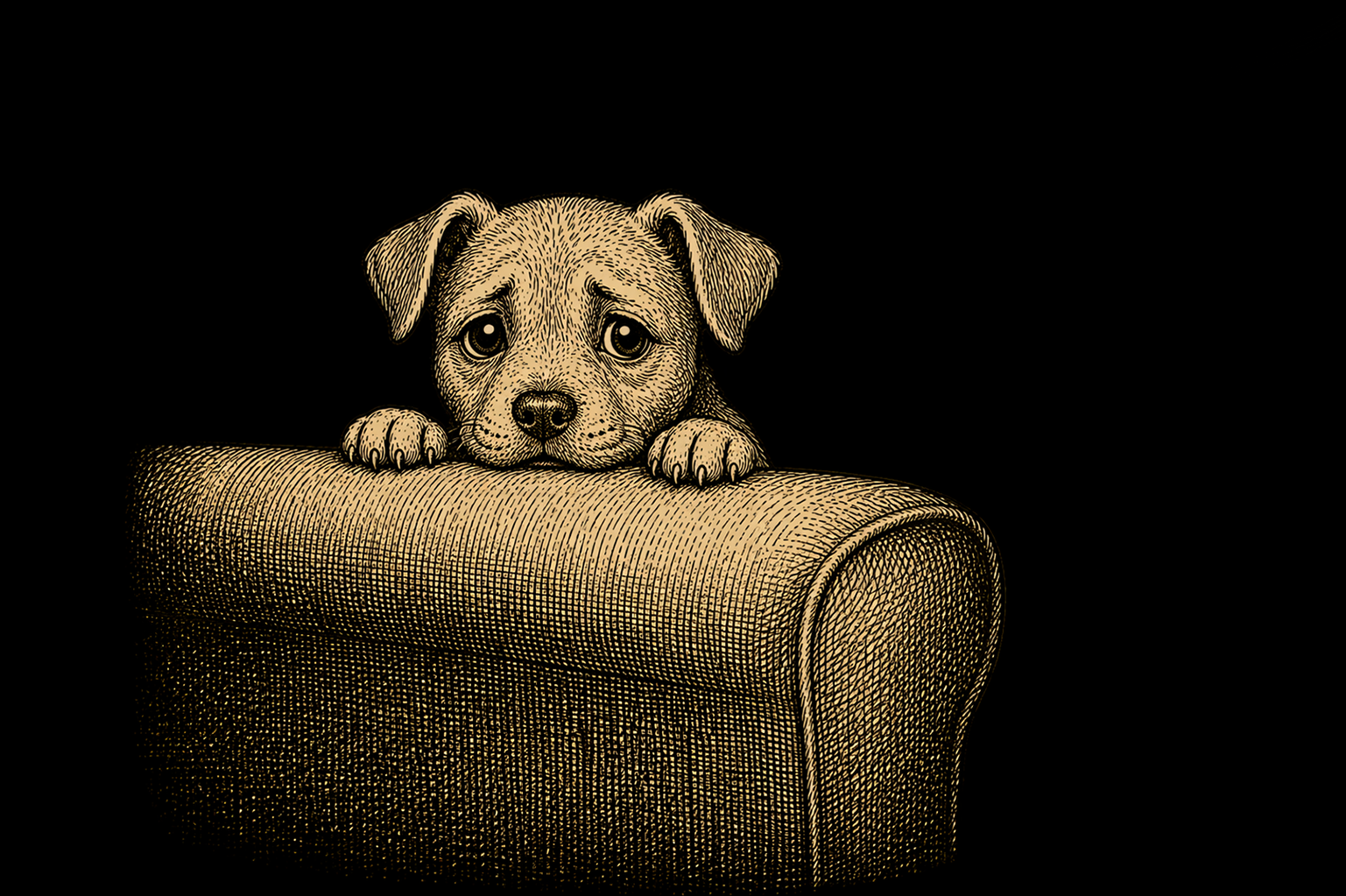
I see this fairly regularly with dogs around six to nine months. Puppies who investigated everything confidently suddenly become hesitant.
This is the second fear period. The timing varies - some dogs at six months, others at eight or nine. Some show minimal signs, but others become intensely reactive. Duration varies too - some dogs move through it in two weeks, others take two months.
New people, unfamiliar dogs, strange objects - anything novel provokes hesitation. Where a younger puppy approached with curiosity, the adolescent dog hangs back.
This is all completely normal and most dogs regain confidence as they mature, usually within a few weeks to a couple of months. The cautious adolescent becomes a confident adult, provided the fear isn't made worse by forcing exposure or creating negative associations during this window.
What the second fear period is
Between roughly six and nine months, many dogs experience a second fear period. During a fear period, the brain becomes temporarily hypersensitive. Things that previously seemed neutral suddenly trigger wariness or outright fear. The dog's perception of what's safe shifts.
New people, unfamiliar dogs, strange objects all provoke hesitation where there was curiosity before. Dogs who greeted other dogs happily at five months now bark, lunge, or freeze when they see one. This isn't usually aggression - it's fear-based reactivity. The dog is anxious about the approach and tries to create distance. Some dogs become clingy during fear periods, unwilling to leave your side. Others become more independent, managing their anxiety by controlling distance. Both are normal responses to feeling uncertain.
When a dog is anxious, their brain prioritises survival. Cognitive function narrows. Training that would have been straightforward at five months becomes impossible at seven, not because the dog is being stubborn but because their brain isn't in a state where learning can happen. This is why recall often fails during fear periods - the dog sees another dog, becomes anxious, and cannot access the trained behaviour.
Why it happens
Survival instincts sharpen during adolescence
In wolves & wild dogs adolescence is when young animals start exploring beyond the safety of their pack. The brain adapts by becoming more cautious - better to overestimate threats than underestimate them. Domestic dogs retain this developmental pattern even though they're not facing the same survival pressures.
The first fear period (around eight to ten weeks) happens when puppies are just becoming mobile and encountering the world. The second happens when adolescent dogs are physically capable of ranging far from safety. Both serve the same function: recalibrating threat assessment at a stage when poor judgement could be costly.
Neurological sensitivity increases
During adolescence, the brain undergoes significant reorganisation. Neural pathways involved in threat detection and emotional regulation are being refined. This temporarily makes the dog more reactive to ambiguous stimuli. The brain is essentially asking, "Is this safe?" about things it previously filed away as neutral.
The adolescent brain is re-evaluating everything the puppy brain accepted without question. Most of those re-evaluations will settle back to "safe," but the process takes time.
Hormonal changes affect stress responses
Adolescence brings hormonal fluctuations that influence how dogs respond to stress. Cortisol and adrenaline responses can be exaggerated during this period. A stimulus that would have produced mild curiosity at four months might produce a significant fear response at seven months - not because the stimulus is more threatening, but because the dog's stress response system is more reactive.
Why it affects training
Fear blocks learning
Fear periods often overlap with broader adolescent regression, compounding the challenges. When a dog is anxious or frightened, their brain prioritises survival over everything else. Cognitive function narrows. They can't process new information effectively. Training that would have been straightforward at five months becomes impossible at seven - not because the dog is being stubborn, but because their brain isn't in a state where learning can happen.
This is why recall often fails during fear periods. The dog sees another dog, becomes anxious, and cannot access the trained behaviour.
Neutral experiences can become negative associations
If you push a dog through something they're frightened of during a fear period, you risk creating a lasting fear. The puppy who hesitated at traffic but was dragged past it may develop genuine traffic phobia. The adolescent who showed wariness toward a stranger but was forced to interact may become defensive around unfamiliar people.
Fear periods are not the time to "proof" behaviours or push through hesitation. They're the time to support, manage, and wait.
Previously safe things may need re-socialising
Some dogs emerge from fear periods with new sensitivities that weren't there before. A dog who loved the beach as a puppy might now find it overwhelming. A dog who was confident around children might need careful re-introduction. This doesn't mean socialisation failed - it means the dog's perception shifted during a vulnerable developmental window, and you need to rebuild confidence gradually.
What doesn’t help
Forcing exposure to feared stimuli
Repeatedly exposing the dog to the thing they're frightened of does not help them "get over it." It increases anxiety and can create genuine phobias. The dog isn't learning that the stimulus is safe. They're learning they can't escape, which makes the fear worse.
Reassuring or comforting the fear
If you see your dog frightened, a natural human instinct is to soothe them - "It's okay, you're fine, don't worry." This doesn't reinforce the fear (that's a myth), but it also doesn't help. The dog's emotional state isn't changed by reassurance. They're still frightened. Calm, matter-of-fact handling works better than overt comfort.
Punishing fearful behaviour
Your dog barks or lunges at another dog out of anxiety, and you correct them for it. This doesn't reduce the fear. It adds stress to an already stressful situation. The dog is now frightened of the other dog and worried about your reaction. Fear-based reactivity gets worse under punishment, not better.
Useful strategies
Manage the environment to reduce exposure
Don't repeatedly put your dog in situations where they're over-threshold. If they're frightened of traffic, avoid busy roads. If unfamiliar dogs trigger anxiety, give them space. If strange men cause wariness, don't force interactions. Management isn't avoidance - it's preventing repeated negative experiences while the dog's brain matures.
In Brighton this might mean choosing quieter routes like Undercliff Walk by Brighton Marina. if it’s easy for you to get up there over busier spots like Preston Park or the seafront centrally. Or in Hove, The Copse, which is right next to Hove Park, but much quieter. Or get yourself up to The Downs! Or just really things like crossing the street when you see triggers approaching. You're not teaching fear by managing—you're preventing rehearsal of fearful responses.
Build confidence at the dog's pace
If your dog is wary of something, let them approach it in their own time. Don't pull them closer. Don't force interaction. Reward small signs of confidence - a glance toward the scary thing, a step closer, relaxed body language. You're building positive associations gradually, not flooding them with exposure.
Counter-conditioning works: pair the scary thing with something good, at a distance where the dog can still think. See a bin lorry in the distance? Treat. See an unfamiliar dog across the park? Treat. You're not rewarding fear - you're changing the emotional association from "threat" to "predicts good things."
Stay calm and matter-of-fact
Your dog looks to you for information about whether something is safe. If you tense up, rush past, or become overly comforting, you signal that there is something to worry about. Staying calm - not dismissive, not overly soothing, just neutral - helps the dog regulate their own response.
This doesn't mean ignoring genuine fear. It means handling it without drama. Calmly create distance from the trigger. Redirect attention to something neutral. Move on without making it a significant event.
Avoid new, intense experiences during this window
This isn't the time to take your dog to a busy market, a fireworks display, or a chaotic dog park. Novel, high-intensity experiences during a fear period can create lasting negative associations. Stick to familiar, low-key environments until confidence returns.
If you've planned something unavoidable - a house move, a family gathering - prepare carefully. Give the dog a safe space. Don't force interactions. Accept that they may need more support than usual.
Wait for the window to close
Fear periods don't last forever. Most dogs move through them within a few weeks to a couple of months. Confidence returns, often stronger than before, because the dog has had time to re-evaluate threats and confirm that most things are safe after all.
You can't speed this up. You can only avoid making it worse. Patience, management, and gradual confidence building are what get you through it.
The Dog's Honest Truth
The second fear period feels like your confident puppy has disappeared. They haven't. Their brain is temporarily recalibrating threat assessment, and caution is part of normal development. Most dogs regain confidence as adolescence progresses, provided you don't force them through fears or create negative associations during this vulnerable window.
This phase is unsettling. It's hard to watch a previously bold dog become hesitant. It's frustrating when training that worked perfectly at five months falls apart at seven. But it's temporary. The confidence returns - often more robust than before, because the dog has learned that the world is safe through experience, not just through puppyhood naivety.
In the meantime, manage the environment to keep your dog under threshold, build confidence at their pace, stay calm and matter-of-fact, and avoid pushing them into situations where fear will rehearse itself.
If you're in Brighton and navigating a fear period, the teenage dog training programme can help. We work with the developmental stage your dog is in, building confidence carefully and preventing fear-based reactivity from becoming entrenched. You can also download the free Terrible Teens Survival Guide for practical strategies to support your adolescent dog through this phase.