
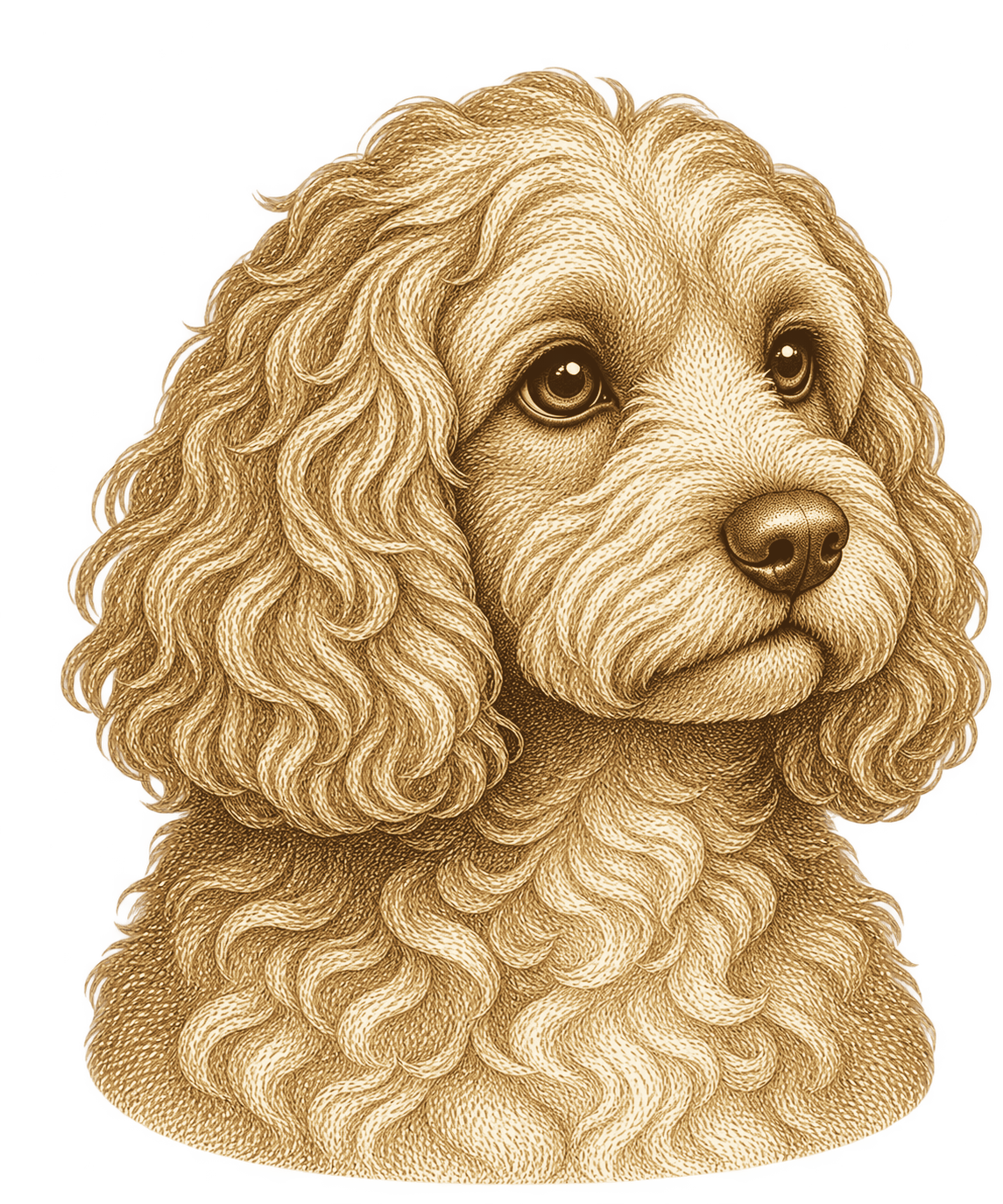
Cavapoo Training & Temperament: Breed Guide
The Cavapoo crosses a Cavalier King Charles Spaniel with a Miniature or Toy Poodle. It was first bred deliberately in Australia in the late 1990s, where it's still usually called the Cavoodle, with the aim of producing a small companion dog with a coat less likely to shed.
Both sides of the family were bred to keep people company. Toy spaniels were favourites at the Stuart court, and the modern Cavalier was rebuilt in the 1920s after an American visitor offered prize money at Crufts for dogs resembling the ones in old royal portraits. The smaller Poodles were bred down from the Standard as companions and performers, keeping the breed's quick mind in a much smaller body.
That shared history shows in the dog you bring home. A Cavapoo tends to be gentle and very tuned in to where you are, which makes them lovely to live with and means time apart needs teaching with care. Size varies more than you might expect, depending largely on whether the Poodle parent was a Toy or a Miniature.
Training approach for Cavapoos
-
Both of a Cavapoo's parent breeds were developed to be close to people, so your attention is a powerful reward alongside a tasty treat. They pick things up quickly, especially from the Poodle side, and short, upbeat sessions suit them well.
They can also be soft dogs who lose confidence when handled roughly or told off sharply. With a dog this small it's easy to fall back on scooping them up or moving them by hand, so teaching them to choose the right behaviour for themselves builds a much more confident dog.
-
Alone time sits at the top of the list. A dog bred for company can find being left genuinely hard, so build it gradually from the start, before your Cavapoo learns that you leaving is something to worry about.
Teach a cue for being picked up, such as saying "up" and pausing before you lift, so your puppy knows what's coming and can show you if they're not keen. Small dogs get lifted a lot, and that predictability helps them stay relaxed about it, including at the vet and the groomer.
Build confidence around bigger dogs at a distance your puppy is comfortable with, rewarding them for calmly watching. Greetings can come later, with steady adult dogs you know.
Toilet training needs close supervision with a dog this size, since small accidents are easy to miss and a tiny bladder means frequent trips outside.
-
Begin alone time in your puppy's first few days home, with a minute or so in another room while they're settled with something to chew. Socialisation matters most in the first few months, so gentle, positive experiences of people, dogs, sounds and handling are worth prioritising from the day they arrive.
Smaller dogs often mature a little sooner than larger breeds, though a Cavapoo will usually still go through an adolescent phase from around six months. Recall and settling can wobble during this time, so keep sessions short and rewarding and carry on with the alone time practice.
Q & A
-
It depends mainly on the Poodle parent. A Cavapoo bred from a Toy Poodle will usually be smaller and lighter than one bred from a Miniature, and with a first-generation cross there can be some variation even within the same litter. Ask to meet both parents, and plan your training with an adult of roughly their size in mind.
-
You need careful preparation. Start with very short absences while your puppy is calm, and only add time once they're relaxed with what came before. If you see signs of worry like whining, pacing or scratching at the door, go back a step. Long days on their own are likely to be hard on a dog this people-oriented, so a dog walker or sitter is worth arranging if you work away from home.
-
They learn the routine as readily as any puppy, but a small bladder means they need to go out more often, and accidents on rugs or behind furniture can easily go unnoticed. Take them out after sleeping, eating and play, and reward generously outside. A pen or crate when you can't supervise stops accidents becoming a habit in hidden corners.
-
Make sure you’re ready for the commitment. Their size and gentle nature make them manageable, though the attachment that makes them so affectionate also means alone time needs steady work. Their coat will need brushing several times a week and regular professional grooming, which is a real cost to factor in.
-
Cavaliers are prone to mitral valve disease, a heart condition, and syringomyelia, which affects the brain and spinal cord. Poodles can be affected by progressive retinal atrophy, an inherited eye condition, and slipping kneecaps. Ask the breeder for heart test results on the Cavalier parent, eye tests and knee checks on both, and whether the Cavalier has been MRI scanned. A responsible breeder will be happy to show you the paperwork.
-
It varies a good deal between individual dogs. A Cavapoo can be quick to bark at the doorbell or at people passing the window, and because they're so attached to their people, barking while you're out can be a sign they're finding time alone hard. Reward quiet moments, teach a settle on a mat for when visitors arrive, and consider window film if passers-by set them off. If the barking only happens when you're not home, it's worth working on alone time first.
Is a Cavapoo right for you?
-
You'd like a small, affectionate dog who'll be part of everything you do, and someone is home for a good part of the day or you can arrange company when they're not. You're happy brushing several times a week, budgeting for regular grooming, and putting gentle, patient work into alone time from the start.
-
You're out for long days with no one to keep your dog company, since a Cavapoo may really struggle with that. A low-shedding coat isn't guaranteed either, so think carefully if anyone at home has allergies. And if you can't find a breeder who health tests both parents, including heart testing on the Cavalier side, it's worth holding off until you can.
If you're in Brighton and Hove and want structured guidance for training your Labradoodle, my Puppy Foundation and Teen Reset programmes can help. Or check out my free Puppy Primer or Terrible Teen Survival guides for a practical starting point.