
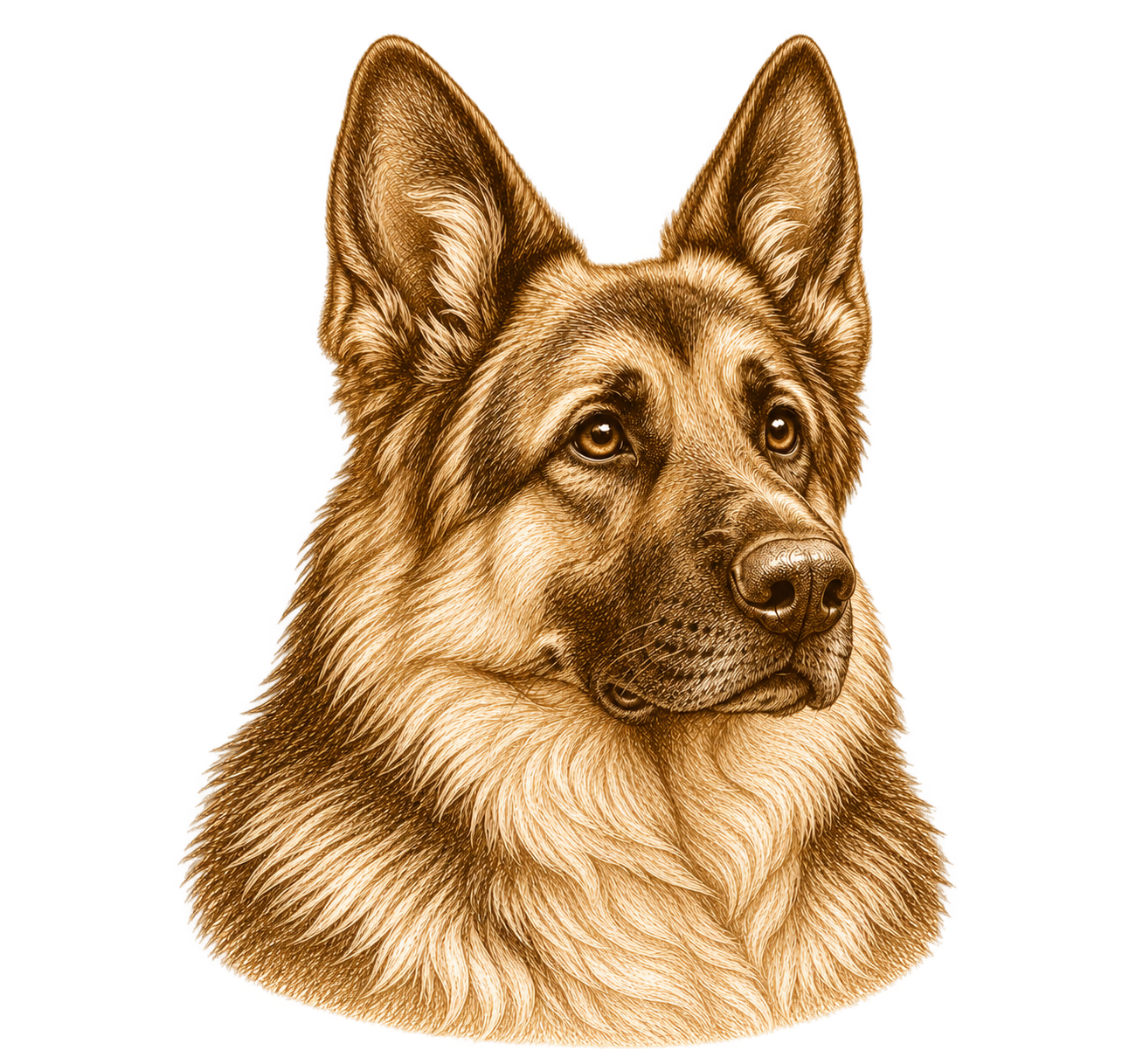
German Shepherd Training & Temperament: Breed Guide
The German Shepherd was developed in Germany at the end of the nineteenth century by a cavalry officer, Captain Max von Stephanitz, who set out to create the ideal working sheepdog. In 1899 he bought a dog called Horand von Grafrath and founded a breed society the same year, with a focus on intelligence, trainability and a willingness to work.
As farming changed, von Stephanitz promoted the breed for police and military work, and German Shepherds have been working alongside people in roles like search and rescue, guiding and detection ever since. In Britain the breed was renamed the Alsatian after the First World War, and only officially became the German Shepherd Dog again in later decades.
That working background gives you a clever, loyal and energetic dog who bonds deeply with their family and tends to keep a watchful eye on anything unfamiliar. A German Shepherd thrives with a job to do, whether that's training games, scent work or simply being involved in daily life, and can become restless or anxious without enough to occupy that busy mind.
Training approach for German Shepherds
-
German Shepherds are some of the most willing learners you'll meet, and they tend to thrive on clear communication and plenty of reward. Food, toys and tug games all work brilliantly, and many Shepherds will work happily for a ball.
They're also sensitive dogs, and harsh corrections can make an alert, watchful Shepherd more anxious or defensive, and that's a real concern in a large, protective breed. Reward-based training builds a confident dog who trusts you to handle new situations, so they don't feel they need to deal with things themselves.
-
Socialisation with people deserves real attention. A Shepherd's natural watchfulness is easier to live with when they've had lots of calm, positive experiences with visitors, strangers and busy places, always at a pace they're comfortable with.
Puppy biting needs patient management from the start. Shepherd puppies are famously mouthy, so redirect them onto tug toys and chews, and give plenty of rest, since an overtired puppy bites more.
Teach settling and alone time early. A dog this devoted to their people can struggle to switch off or cope with being apart, so short, calm absences and a settle on a mat are worth practising from week one.
Give their brain regular work with scent games, puzzle feeders and short training sessions, which often tire a Shepherd far more effectively than extra walking.
-
Start from day one with short training games, handling, gentle alone time practice and plenty of naps. The first few months are the key window for socialisation, so plan positive experiences with people, sounds, places and other dogs as early as your vet advises.
Adolescence usually kicks in from around six months and can bring a new wariness of strangers or unfamiliar things, along with a fair bit of testing. Keep up the confidence work through this stage and keep leaning on your training as they grow bigger and stronger.
Q & A
-
Shepherd puppies are known for being especially mouthy, partly because they were bred to use their mouths to grip and guide livestock. Keep a tug toy or chew to hand and swap it in whenever teeth land on skin, and look at how much sleep your puppy is getting, since biting often ramps up when they're overtired. Most puppies grow out of the worst of it as their adult teeth come through, especially with consistent redirection.
-
They were bred to work closely with one handler, so wanting to be near you is very much part of the breed. It's lovely, but it's worth teaching them to relax away from you too. Practise short spells of settling in another room with a chew, and reward calm behaviour when you move around the house so they learn your leaving the room isn't a big deal.
-
Shepherds are a vocal breed, and whining can mean excitement, frustration, boredom or worry. Notice when it happens, as that usually points to the cause. If it's while waiting for something exciting, reward quiet moments instead; if it's when they're left alone or unsettled, work on settling and alone time; and if it's new or unusual, check with your vet.
-
Many are polite but reserved, which is in keeping with their guarding history. Early socialisation makes a big difference, so give your puppy lots of calm, positive meetings with different people, and let them approach in their own time. Never force interactions, and if your Shepherd starts barking or lunging at people, get help from a qualified trainer early on.
-
German Shepherds can be prone to hip and elbow dysplasia, where the joints don't develop properly. Responsible breeders have their dogs X-rayed and scored under the BVA/KC schemes, and many also DNA test for degenerative myelopathy, a condition affecting the spinal cord. Ask to see the parents' results before you commit to a puppy.
-
After the First World War, anything German was unpopular in Britain, so the breed was renamed the Alsatian, after the Alsace region on the French-German border. The name stuck for decades, and it was a long time before the breed was officially called the German Shepherd Dog again here, which is why many people still use both names.
Is a German Shepherd right for you?
-
You want a loyal, intelligent dog who'll be a real partner, and you enjoy training, long walks and finding ways to keep a clever dog busy. You have time to put into socialisation in the early months, and someone is around for a good part of the day.
-
You're out for long hours, since a Shepherd left with little to do can become anxious or destructive. If you'd like a dog who's instantly friendly with everyone, a more naturally outgoing breed may suit you better. They also shed heavily all year round, so be ready for plenty of hoovering.
If you're in Brighton and Hove and want structured guidance for training your German Shepherd, my Puppy Foundation and Teen Reset programmes can help. Or check out my free Puppy Primer or Terrible Teen Survival guides for a practical starting point.