
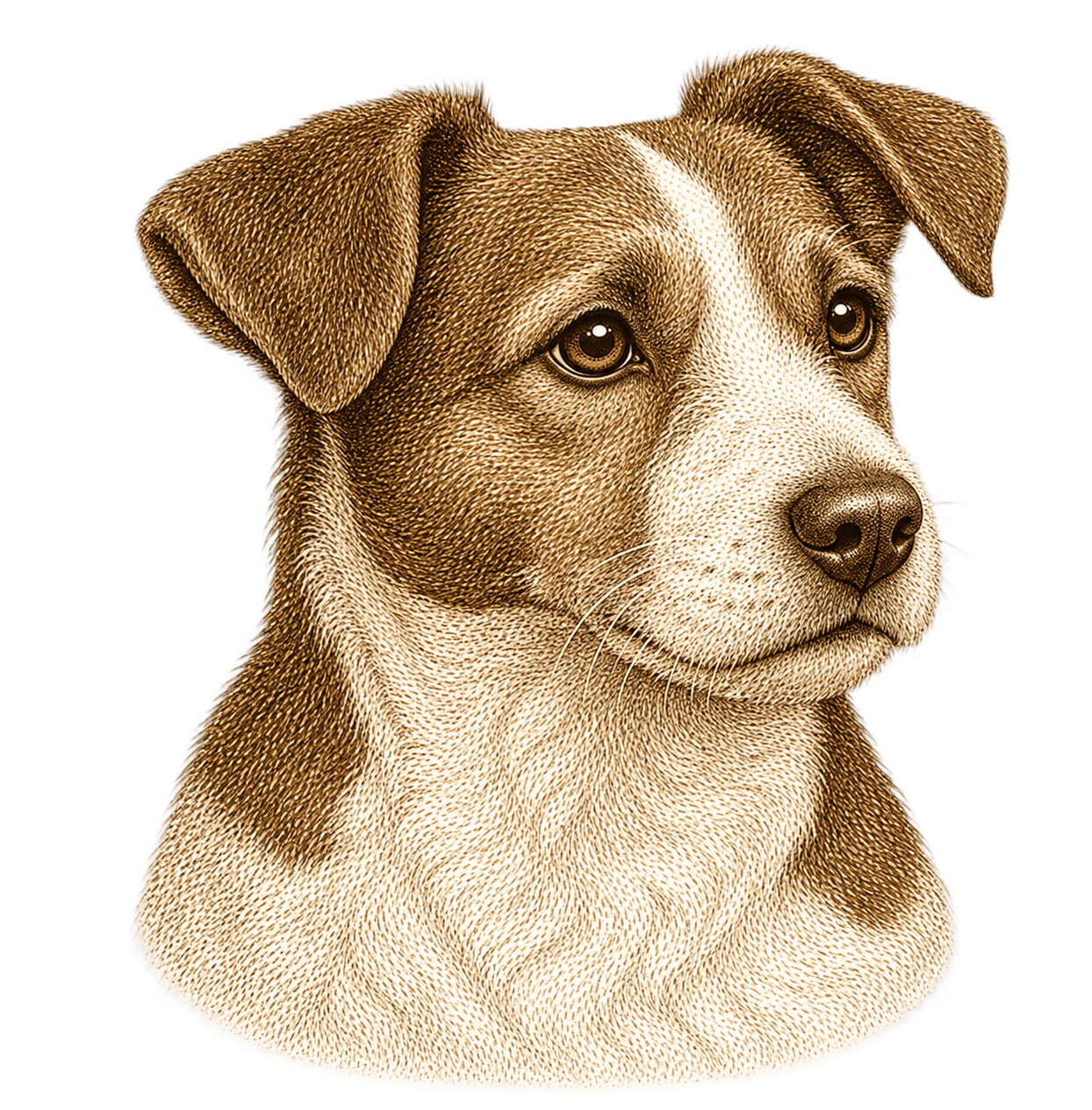
Jack Russell Training & Temperament: Breed Guide
The Jack Russell takes its name from the Reverend John Russell, a nineteenth-century Devon parson with a passion for fox hunting. While still a student at Oxford, he bought a small white terrier called Trump from a local milkman, and she became the foundation of his line.
Russell's terriers were bred to run with the hounds and follow the fox underground, then bolt it back out of the earth. A mostly white coat meant the hunt could tell dog from fox at a glance. Down a hole, with no one to give directions, the terrier had to work out what to do alone and keep going until the job was done.
That heritage still shows in a modern Jack Russell. Expect a bright, bold, energetic little dog with a strong prey drive, a fondness for digging and a lot of opinions. They're also huge fun to live with, quick to learn when the reward is worth it, and far tougher and more athletic than their size suggests.
Training approach for Jack Russells
-
A Jack Russell was bred to make its own decisions and stick at a task with real determination. Pushing back with force tends to bring out that tenacity, so confrontation usually leaves you with a more stubborn dog and a strained relationship.
What works brilliantly is making cooperation worth their while. Most Jack Russells love food, and many love a game of tug or chase even more, so using play as a reward taps straight into what they were bred for. Short, lively sessions that feel like a game keep a busy terrier brain switched on and working with you.
-
Recall needs to be built early and practised often, because a Jack Russell who spots a squirrel or catches a scent will want to follow it. Use a long line in open spaces, and make coming back exciting with a game of tug as the payoff.
Give the hunting instincts a proper outlet. A flirt pole, scent games and a designated digging spot in the garden all let your terrier do what comes naturally in ways you're happy with.
Work on calm around other dogs from the start. Jack Russells can be quick to stand their ground, so steady, well-matched play partners and rewarding calm behaviour around other dogs help them grow up sociable.
Teach a reliable trade too, swapping whatever they've grabbed for something better. A dog bred to hang on tight benefits from learning that letting go pays.
-
Start on day one with name games, simple recall around the house and trading toys for treats. Introduce your puppy to calm, friendly adult dogs as early as your vet advises, since good early experiences with other dogs make a real difference with this breed.
Adolescence usually arrives from around six months, and this is often when a Jack Russell's independence really shows. Recall can suddenly seem to vanish, so keep the long line handy and carry on rewarding generously while they come through it.
Q & A
-
Digging is part of the job they were bred for, so the most effective approach is to give it a home. Set up a digging pit or sandpit in one corner, bury toys and treats in it, and praise them for using it. If they start on the flowerbeds, calmly lead them over to their own patch instead.
-
They're following scent, exactly as their ancestors did when they went to ground after foxes. Keep them on a long line in places with plenty of rabbit burrows or thick undergrowth, and practise recall in easier spots first. Rewarding them for checking in with you during a walk helps build the habit of staying connected.
-
Many are, especially with plenty of positive experiences while young. They can be quick to stand their ground, though, and some don't enjoy rough play or pushy dogs. Pick calm, well-matched playmates, step in before games get too heated, and give them space from dogs they clearly don't like.
-
They can be, especially with older children who enjoy playing sensibly. A Jack Russell's love of energetic games makes them great fun as a family dog, though their small size and quick reactions mean they may not tolerate being grabbed, cuddled tightly or chased. Teach children to let the dog come to them and to leave them be when they're resting or eating, supervise play, and give your dog a quiet spot they can retreat to whenever they've had enough.
-
A dog bred to grab and hold on can feel strongly about keeping what they've got. So yes, they can be resource guarders and you need to teach a trade from puppyhood, swapping items for something better and often handing the original back, so your dog learns that people approaching their things is good news. If your Jack Russell growls, stiffens or snaps over food or toys, speak to your vet about a referral to a qualified behaviourist rather than trying to take items off them.
-
Both come from the Reverend John Russell's terriers. The Parson Russell is the longer-legged, squarer type, while the Jack Russell is generally shorter in the leg and slightly longer in the body. The Kennel Club recognises both as separate breeds, but in training terms they share the same drive, energy and need for an outlet.
Is a Jack Russell right for you?
-
You'd love a small dog with a big personality, and you enjoy active walks, games and a bit of daily training. You have a securely fenced garden, a sense of humour about the odd excavation, and you like a dog with plenty of spark.
-
You have cats, rabbits or other small pets at home, since a Jack Russell's prey drive can make that a difficult mix. If you're hoping for a dog you can let off lead anywhere, the chase instinct means that's a long-term project. And if a quiet house and a pristine garden matter a lot to you, a calmer breed will be easier to live with.
If you're in Brighton and Hove and want structured guidance for training your Jack Russell, my Puppy Foundation and Teen Reset programmes can help. Or check out my free Puppy Primer or Terrible Teen Survival guides for a practical starting point.