
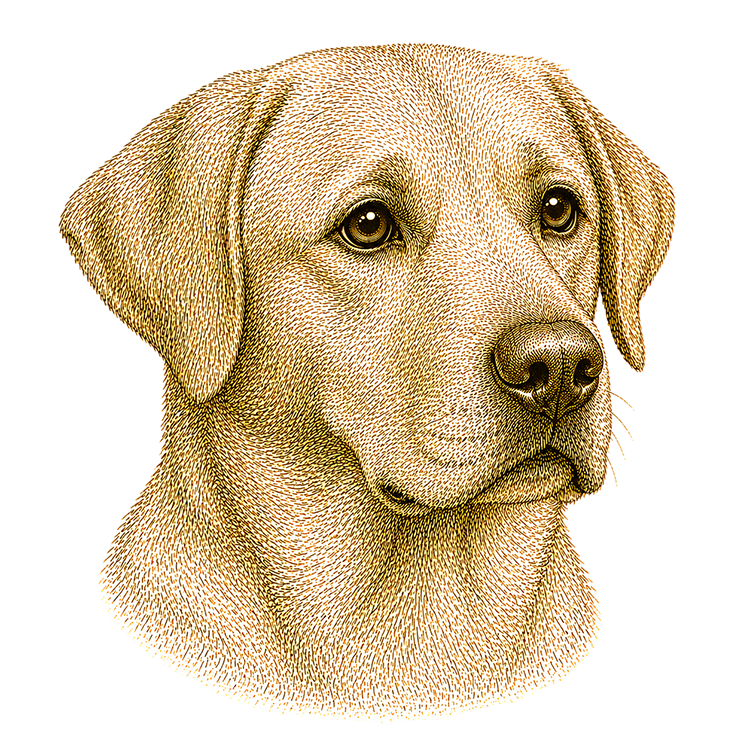
Labrador Retriever Training & Temperament: Complete Breed Guide
Labradors Retrievers be misunderstood because they’re too easy to like. They’re friendly, enthusiastic, food-motivated, and generally keen to cooperate - which leads people to assume they’re simple to live with. In reality, Labradors were bred to work hard, for long periods, in difficult conditions, and that working engine is still very much running in the modern pet dog.
Their original job was to retrieve shot game for hunters in harsh, practical conditions, not just to swim after birds. Their work included retrieving from cold water, marshland, rough ground, hedgerows, and open fields, often repeatedly and over long periods. They were expected to carry game gently, return directly to the handler, and stay mentally engaged throughout a day’s shooting.
Labradors struggling in domestic environments aren’t necessarily badly trained. They’re struggling because they’re being asked to live like calm companion dogs when they’re wired as working retrievers. Pulling on the lead, jumping up, mouthing, stealing food, struggling to settle - these aren’t random problems. They’re predictable expressions of energy, motivation, and slow-developing impulse control and I design programmes around giving them exercises which tap into, and give an outlet to, their natural impulses, which mens those instincts don’t come out sideways in destructive behaviours in the home.The aim isn’t to suppress the breed’s instincts, but to channel them so the dog can live comfortably and predictably as part of a household.
Labradors usually respond extremely well to reward-based training. Their food drive and willingness to engage make them fast learners, but that same motivation can work against you if boundaries aren’t taught early. Excitement often overwhelms judgement, especially through adolescence, and physical strength arrives long before emotional maturity. What looks like disobedience is often just enthusiasm outpacing self-control.
Training approach for Labrador Retrievers
-
Labrador Retrievers are among the most food-motivated breeds in existence. This extreme food drive makes positive reinforcement exceptionally effective - Labs will work enthusiastically for rewards in ways that less motivated breeds simply won't. When you combine this food motivation with their natural desire to cooperate with handlers, force-free training becomes both highly effective and efficient.
However, Labs are also sensitive dogs despite their physical robustness. Their social nature means they're attuned to handler mood and response. Harsh corrections don't just suppress behaviour - they damage the social trust that makes Labs such willing partners. A Lab who becomes anxious around their handler often develops increased jumping, mouthing, and social overwhelm as stress-related behaviours intensify.
The breed's physical strength makes punishment-based methods genuinely dangerous. A 30kg Lab pulling on a prong collar or check chain can cause significant injury to both dog and handler. When that physical power combines with the frustration and arousal that punishment creates, you risk escalating behaviours rather than resolving them. Positive methods allow you to manage strength through training rather than restraint.
Labs were bred as close-working retrievers, selected for cooperation and biddability over generations. Punishment-based training works against the breed's genetic design - these are dogs built to work with handlers, not comply through fear. When the working relationship is collaborative, Labs remain engaged, enthusiastic, and willing to work through the extended adolescence (18-24 months) that's typical in this breed.
The relationship remains central. Labs form intense social bonds with their people, and when that bond is based on trust, positive association, and clear communication rather than correction and avoidance, you get a dog who remains trainable, confident, and socially balanced throughout their life.
-
Again, the defining training challenge for Labrador Retrievers is impulse control around food. This isn't minor greed - it's genetic programming for extreme food motivation. Labs steal food, counter-surf, scavenge on walks, lose their minds at meal times, and can develop resource guarding. Teaching impulse control needs to start immediately and continue through adolescence: waiting for meals, ignoring dropped food, leaving things alone on cue, settling while food is visible. Without this foundation, you get a dog who barges through doors, jumps on worktops, and becomes genuinely difficult to live with.
Physical enthusiasm is the second major challenge. Labradors are strong, excited greeters who jump, pull, and mouth. An adolescent Lab pulling toward another dog or jumping on a visitor is just the breed’s natural excitement overwhelming their impulse control. To help mange this physical behaviour I focus on teaching incompatible behaviours (sit for greeting, loose-lead walking, calm transitions), creating consistent boundaries, and encourage owns to have realistic expectations during adolescence when regression is normal.
Adolescence in Labradors lasts longer than most breeds - expect significant regression until 18-24 months, not 12 months. This extended regression natural across all breeds and, although it’s certainly frustrating, it doesn’t mean you’ve ‘failed’ in your training in some way. Give yourself a break if you feel that way - it’s perfectly normal that behaviours that were solid at six months fall apart at nine months. The friendly puppy becomes a physically strong teenager with poor impulse control.
Maintaining consistent training through this period is the main priority - something that many people forget, or don’t even know about in the first place, which is specifically why I developed my Teen Reset programme in the first place. If you check out the programme detail, I hope you’ll think ‘Ah - I recognise that behaviour!’, and feel reassured that there’s something you can do about it.
As will al dogs, early, extensive socialisation is hugely important, despite Labradors’ reputation reputation as bombproof friendly dogs - poor socialisation can create fear-based reactivity.
-
If you’ve read any of my other breed guides, I’m sure I sound like a broken record, but as I tell all new puppy owners, training can’t start too soon - that fluffy bundle of cuteness that arrives with you at 8 weeks is taking in a huge amount of new information every day and it’s your job to help them learn in way that’s most helpful to their future life as soon as they’ve settled in. But take it gently!
Labrador Retrievers were bred to work in close contact with handlers, and this creates dogs who are highly attuned to human behaviour from an early age. Their extreme food motivation means structured reward-based training can start earlier and progress faster than in many breeds - an 8-week-old Lab puppy is already capable of learning multiple behaviours if training is appropriate to their age.
However, early training in Labs isn't just about teaching cues. It's primarily about establishing boundaries before physical strength and social enthusiasm become overwhelming. An 8-week-old Lab weighs perhaps 8kg and is easily managed. A 6-month-old Lab weighs 25-30kg, has enormous physical strength, and will drag you toward every dog and person they see if boundary training hasn't been established. Leash manners, door manners, greeting behaviour, and impulse control need foundation work from day one.
Structured formal training can begin around 10-12 weeks in Labs - slightly earlier than more sensitive breeds - because they're mentally robust, highly food-motivated, and eager to engage. However, training sessions must remain short and positive. Labs' enthusiasm can tip into frustration quickly if training becomes repetitive or unclear.
Adolescence in Labradors is notoriously long, often running from 6 months through to 18-24 months. Regression is significant: recall fails, pulling intensifies, jumping returns, and focus disappears. This extended adolescence is one reason Labs have a reputation for being "difficult teenagers" despite their trainability. Maintain training through this period even when it feels like every skill has disappeared.
For adolescent or adult Labs, training can start immediately and often progresses quickly once appropriate boundaries and structure are established. However, you're frequently working against months or years of practiced behaviours -jumping, pulling, social overwhelm - that have been inadvertently reinforced through lack of management.
Q & A
-
Labradors jump because they're enthusiastic greeters. They're bred to be social, friendly, and demonstrative. Jumping is how they express excitement and try to reach faces. It intensifies during adolescence when impulse control fails and physical strength increases.
Jumping isn't an attempt at ‘dominance’ (an old myth that has long been rejected by anyone familiar with modern canine behavioural science will know) or lack of ‘respect’ - that’s just us projecting our human behaviours and hierarchies onto our dogs; the behaviour is just natural exuberance and excitement overwhelming impulse control in a young, socially motivated dog.
The management strategies I teach news clients include rewarding incompatible behaviour (sit for greeting), also a big focus on rewarding their dogs when they have ‘four-paws-on-the-floor’, managing the environment so jumping isn't rehearsed (i.e. keep the dog on lead during greetings, use baby gates), and remove attention when jumping occurs (turn away, withdraw).
Consistency is essential - if jumping sometimes gets attention, it will continue.
Some techniques that old-fashioned trainers recommended seem pretty barbaric now, even though the may have ‘worked’ - all they’re doing is suppressing behaviours rather than achieving meaningful and lasting change. Kneeing the dog in the chest can easily cause injury and anxiety. Shouting just gives them attention and attention is precisely what they’re looking for.
And don’t assume the the dog will "grow out of it" without training. They won't. Labradors can jump enthusiastically at three years old if it's never been addressed.
-
The clue’s in the name! Labradors use their mouths a lot because carrying and holding objects is central to what the breed was developed to do. Retrieving shot game required picking things up, holding them gently, and returning them under excitement, often over and over again. That instinct shows up in everyday life as grabbing, chewing, and carrying whatever’s available.
Mouth use starts early because puppies explore through chewing, then tends to spike again during teething and adolescence when impulse control drops. It’s also more noticeable when Labradors are under-stimulated or overly excited. As maturity and self-control improve, most Labradors become less grabby, though many will always enjoy carrying something - that’s normal for a retriever and doesn’t need to disappear entirely.
-
A Labrador retrieving a shot bird isn’t chasing, killing, or eating anything. They’re swimming in cold water, pushing through reeds, picking up something dead, and bringing it straight back to a person - often over and over again. For most dogs, that would lose its appeal very quickly.
Strong food motivation made the job worth doing. Dogs that really cared about food were more willing to repeat the same task, stay focused on the handler, and keep working even when the conditions were uncomfortable or dull. They didn’t need the work to be exciting - they just needed to know there was a payoff.
Over time, breeders kept the dogs that stayed engaged and reliable, and those tended to be the ones with high food motivation. That’s why modern Labradors learn quickly, repeat behaviours easily, and also happen to be very enthusiastic about anything edible. The same trait that once made them dependable workers is what now makes them such determined scavengers.
-
Labrador Retrievers usually need around an hour to an hour and a half of activity each day, spread across a few outings. But how that time is used matters far more than the number on the clock. Labradors don’t just need to move - they need something to do with their brains.
A long, slow walk on the same route every day often leaves a Labrador physically exercised but mentally restless. Activities that involve searching, retrieving, problem-solving, or training tend to settle them far more effectively. Using their nose, carrying objects, and working things out taps into what the breed was designed for.
Water work suits Labradors particularly well. Many will happily swim for longer than they’d run, and it provides a lot of exercise without the same impact on joints. Mixing different types of activity across the week keeps exercise meaningful rather than just repetitive.
As with lots of breeds, it’s a mistake to think that simply adding more and more exercise is the answer. Labradors adapt quickly and become fitter, which often leads to a dog that needs even more activity to feel satisfied. The real balance comes from combining physical movement, mental engagement, and time spent learning how to switch off between outings.
-
Labradors pull because moving forward is what they’re built to do. They’re enthusiastic, social dogs who want to investigate smells, greet people, and get where they’re going quickly. Walking slowly beside a human on a loose lead isn’t instinctive behaviour - it’s a trained skill that goes against their natural momentum.
Pulling usually ramps up during adolescence. As strength increases and impulse control temporarily drops, pulling often becomes harder during adolescence - and it’s completely normal in a physically powerful, excitable breed.
Loose-lead walking takes time because you’re teaching something that doesn’t come naturally. Labradors learn it best when practice happens in calm environments first, before gradually adding distractions. Harnesses can make walks more manageable while the dog is learning, but they don’t replace the training itself to change to change the root behaviour in a way that sustains.
Progress tends to be uneven. Most Labradors improve steadily, then regress during adolescence, then improve again as maturity catches up. Expecting fast or linear results usually leads to frustration. With consistent practice and realistic expectations, most Labradors do learn to walk calmly - it just takes longer than people expect.
-
Labradors are highly food-motivated and generally keen to work with people, which often makes recall feel easier than it is in scent-driven breeds. When recall falls apart with a Labrador, it’s usually not because they’re lost in a smell - it’s because something social has caught their attention. Another dog, a friendly stranger, or a group of people can be far more compelling than anything you’re offering.
This tends to show up most clearly during adolescence. A recall that seemed solid at four or five months can suddenly disappear when impulse control drops and social interest ramps up. The dog hasn’t forgotten the cue - they’ve just discovered that greeting feels better than returning in that moment.
Reliable recall develops gradually because it depends on self-control as much as training. Labradors do best when recall is practised in situations where success is likely, then carefully extended into more distracting environments. Many need some form of management for a while, especially during the teenage phase, simply to prevent rehearsing ignoring you.
Improvement is rarely linear. Most Labradors become more reliable as maturity catches up and excitement becomes easier to regulate. Expect recall to be strongest in familiar, low-distraction settings first, and to take longer to hold when other dogs or people are involved. For this breed, recall isn’t about eliminating enthusiasm - it’s about teaching them to choose you even when something friendlier is nearby.
-
Labradors expect to be part of the action. Generations of working closely with people means many of them assume they’ll be included, or at least nearby. That preference for company is normal for the breed, but it often gets misread when things go wrong at home.
When Labradors struggle while left alone, it’s very often practical rather than emotional. Their food motivation doesn’t pause just because the house is empty. If there’s access to bins, worktops, or anything vaguely edible, a Lab will usually investigate. That behaviour tends to start immediately after you leave and stops when the opportunity disappears - a pattern that points to impulse and instinct, not distress.
Learning to cope with being alone still matters, but Labradors don’t usually need dramatic separation training. They do better when time alone is introduced early, kept predictable, and treated as unremarkable. Big emotional departures or constant reassurance often make things noisier rather than calmer for this breed.
Because Labs are so reward-driven, they often settle best when being alone comes with something worthwhile to focus on - and when the environment removes temptation rather than relying on self-control. Expecting a Labrador to “choose not to” scavenge when unsupervised goes against how the breed is wired.
When a Labrador is genuinely distressed, it’s usually obvious: frantic attempts to escape, sustained vocalising, or an inability to settle even when nothing tempting is available. In these cases I would always encourage owners to seek more specialist help from a properly qualified canine behaviourist specialist. Far more commonly, though, living successfully with a Labrador means teaching independence as a normal life skill and accepting that management around food isn’t a phase - it’s part of the breed.
-
Labrador Retrievers are usually affectionate, tolerant dogs who enjoy being part of family life, which is why they’re so often chosen for homes with children. The challenge isn’t temperament - it’s scale and enthusiasm. Labradors are big, strong, socially driven dogs who don’t come with an off-switch.
Most issues arise from sheer physical exuberance. Labs jump, lean, pull, and throw their weight around when they’re excited. A friendly greeting can easily knock over a small child, and their strength means even well-meaning behaviour can feel overwhelming. This isn’t a ‘problem dog’ - it’s a working breed doing what it was built to do in the wrong context.
Children’s movement adds another layer. Running, squealing, and sudden changes of direction often trigger chase and retrieve instincts. That can look like jumping, following closely, or grabbing with the mouth in play. Labradors usually mean no harm, but without clear boundaries they can become pushy simply because engagement feels rewarding.
Mouth use deserves special mention. Carrying things is hard-wired in the breed, and many Labs interact with people using their mouths long past puppyhood. While their “soft mouth” means injuries are rare, the frequency of grabbing can be upsetting for children who don’t understand what’s happening.
Labs do best with children when calm behaviour is actively taught early, excitement is managed rather than encouraged, and interactions are supervised. Families who enjoy training, structure, and clear boundaries often thrive with a Labrador. Families hoping for a naturally restrained, self-regulating dog may find the breed more work than expected.
-
Labrador Retrievers are among the most trainable breeds in existence when "trainable" means learning and performing behaviours for food rewards. Their extreme food motivation, handler focus, and cooperative nature make teaching cues straightforward. In controlled training environments, Labs excel - they learn quickly, work enthusiastically, and generalise behaviours reliably.
However, "easy to train" and "easy to live with" are different things. Labs are physically powerful dogs with intense social drive, significant stamina, and extended adolescence. Teaching a Lab to sit is easy. Teaching them not to drag you toward every dog and person, not to jump on visitors, not to pull relentlessly on lead, and not to raid bins requires managing physical power and social enthusiasm that persist despite training. The behaviours are easy to teach; maintaining them against competing motivations is hard.
Impulse control is the real training challenge. Labs want everything - food, social contact, movement, play - and they want it immediately. Building the capacity to wait, to disengage, and to regulate their own arousal takes substantial time and doesn't come naturally. During adolescence (6-18 months, sometimes extending to 24 months), impulse control deteriorates significantly, and previously reliable behaviours fall apart. This extended immaturity is one reason Labs are overrepresented in rescue despite being "easy to train."
Food motivation creates both advantages and complications. Labs will work for food in ways less motivated breeds won't, but their food obsession also drives counter-surfing, bin-raiding, and persistent begging. Training competes with environmental rewards that are often more valuable than anything you're offering.
Social drive shapes training outcomes. Labs often ignore recall not because they don't understand it, but because greeting another dog or person is more rewarding than returning to the handler. Their friendliness isn't easily controlled through training - it's a core characteristic of the breed. You can manage it, but you can't train it out.
Physical strength matters throughout training. A 30kg Lab pulling on lead requires significant handler strength and skill to manage. Training loose-lead walking takes months, and during adolescence, progress often regresses completely. The combination of power, enthusiasm, and poor impulse control during the teenage phase is why many owners struggle despite the breed's trainability.
If "easy to train" means teaching behaviours quickly in training contexts - yes, Labs are easy. If it means getting a naturally well-behaved dog without substantial training input - no. Labs need consistent, structured training throughout adolescence and often into adulthood. The reputation for being "easy" contributes to abandonment rates when reality doesn't match expectations.
-
Labrador Retrievers are generally non-aggressive. They're famously friendly, tolerant, and social. However, poor breeding, inadequate socialisation, or chronic stress can create defensive behaviour in any breed.
Most aggression seen in Labradors is fear-based or resource guarding. They're soft dogs despite their size. When frightened, overwhelmed, cornered or in pain, they may snap defensively. This isn't breed aggression - it's a normal stress response poorly managed.
Resource guarding - protecting food, toys, or resting places - is common in Labradors because of their extreme food motivation. When addressed early and handled with modern training methods, it's very manageable. Punishing resource guarding makes it worse. The dog learns that people approaching valuable items predict confrontation, so they guard more intensely.
Pain-related aggression is also possible. Labradors have high pain tolerance and often don't show obvious signs of injury. A dog snapping when touched might have hip dysplasia, ear infection, or other painful condition. Veterinary assessment is essential before assuming behavioural causes.
If your Labrador shows aggression, consult a qualified behaviourist. The vast majority of cases are treatable with the right approach.
-
Socialisation starts as soon as your Labrador puppy comes home, with the key window running from roughly 3 to 16 weeks. Socialisation isn’t the same as socialising. Socialisation is learning that the world is safe; socialising is direct interaction. Labradors need both, but calm exposure matters more than constant greetings.
Between around 8 and 12 weeks puppies accept novelty most easily, with the period up to 16 weeks still critical. Labradors are often described as “bombproof,” but that confidence is learned, not automatic. Labs who miss out on positive early exposure can still develop fear or uncertainty later on, despite their friendly reputation.
For Labradors, priorities include exposure to a wide range of people and appearances, everyday environments, routine handling, and calm behaviour around other dogs. Because Labs are highly social and enthusiastic, learning neutrality - that people and dogs don’t always require interaction - is just as important as positive contact.
How exposure is handled matters. Let your puppy observe from a comfortable distance, reward calm behaviour, and build gradually. Avoid overwhelming situations or forced interactions, which can undermine confidence rather than build it.
Keep sessions short, positive, and varied. A few minutes of good exposure is far more valuable than a long, overstimulating outing.
For a detailed, step-by-step guide to getting puppy socialisation right during this critical stage, check out my blog post on socialisation
-
Positive reinforcement. Reward-based training that builds on what the dog offers naturally: enthusiasm, food motivation, desire to please. Labradors are soft dogs despite their size. They shut down under pressure, become anxious with repeated corrections, and lose confidence if training is harsh.
Force-free training works because it channels the dog's retrieving drive and enthusiasm into cooperation. You're not suppressing genetic behaviour through punishment - you're redirecting it into behaviours you want. The dog remains confident, engaged, and trusting.
Consistency matters. Labrador Retrievers generalise well once a behaviour is established, but inconsistent training confuses them. If recall sometimes means "come immediately" and sometimes means "come when you feel like it," the cue loses meaning. Clear, consistent expectations help them learn faster.
If you're in Brighton and want professional help, my puppy training or teenage dog training programmes can provide structured guidance tailored to your Labrador's developmental stage.
Is a Labrador Retriever right for you?
-
You want an active, enthusiastic companion who enjoys being involved in daily life. Labrador Retrievers were bred as close-working retrievers and tend to be very people-oriented. Most Labs prefer company and involvement over long periods of isolation, although with training they can learn to be comfortable alone for reasonable stretches.
You can provide around 60–90 minutes of daily exercise plus mental stimulation. Labradors need both physical activity and brain work to stay settled. When under-exercised or under-stimulated, they’re more likely to develop problem behaviours.
You’re committed to positive, consistent training and have patience for a slow-maturing breed. Labradors learn quickly, but adolescence is often extended and challenging. If you want a dog that matures early and settles quickly, a different breed may suit you better.
You live in an environment that allows regular outdoor activity. Labradors are working gundogs and benefit from opportunities to run, retrieve, swim, and explore. Urban living can work if you have reliable access to parks, water, and open spaces.
You’re willing to manage food carefully. Labradors are highly food-motivated, prone to obesity, and will scavenge given the chance. If you want a dog that naturally self-regulates food intake, a Lab is unlikely to be a good fit.
-
You’re not prepared to manage a physically strong, enthusiastic dog. Adult Labradors are powerful, excitable and need training to be manageable - they’re not a breed you can rely on physical control alone to handle.
You want a dog that matures quickly. Labradors have a long adolescence (often 18–24 months) and remain energetic, impulsive and socially enthusiastic well past puppyhood.
You prefer a naturally calm, disengaged dog. Labradors are highly social and tend to pull toward people, dogs and activity unless taught otherwise. Composure around distractions takes time and training.
You can’t provide regular, varied exercise. Labs do best with access to open space, retrieving and ideally swimming. Small-space living can work, but only with consistent effort to meet their needs.
You don’t want ongoing food management. Labradors are extremely food-motivated, prone to scavenging and weight gain, and require secure food storage and controlled feeding.
You want a low-shedding, low-contact dog. Labs shed heavily and are physically affectionate, mouthy and tactile in how they interact.
If you're in Brighton and Hove and want structured guidance for training your Labrador Retriever, my Puppy Foundation and Teen Reset programmes can help. Or check out my free Puppy Primer or Terrible Teen Survival guides for a practical starting point.