
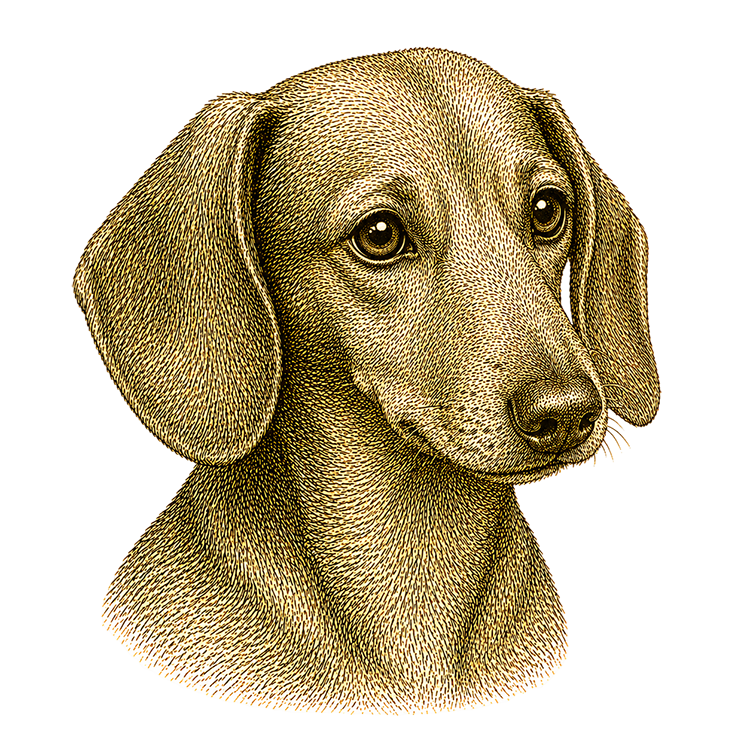
Miniature Dachshund Training & Temperament: Complete Breed Guide
Miniature Dachshunds were bred to hunt independently underground, pursuing prey in confined spaces where human guidance wasn’t possible. That history shaped a dog that is courageous, determined, vocal, and far more independent than their size suggests.
This guide focuses on training Miniature Dachshunds as family companions. While they now live in homes rather than burrows, they still carry the instincts of a working hound - independence, persistence, prey drive, and a strong voice.
Many common Dachshund challenges stem from this mismatch between genetics and modern life. Barking, unreliable recall, resistance to pressure, and boundary-testing aren’t signs of a “difficult” dog - they’re predictable traits in a breed designed to think for itself.
Training works best when it respects those traits rather than trying to suppress them. Dachshunds respond well to positive reinforcement, clear structure, and realistic expectations, but poorly to harsh correction or force-based methods.
This guide explains why Dachshunds behave the way they do, which training approaches actually work, and how to live successfully with an independent, vocal, physically vulnerable hound in a small package.
Training approach for Miniature Dachshunds
-
Miniature Dachshunds are sensitive and wilful - a challenging combination. Harsh corrections damage trust quickly and can increase defensive behaviour in a breed that is more likely than average to show resource guarding or “small-dog” coping strategies when stressed.
Physical corrections are particularly inappropriate for Dachshunds due to their risk of intervertebral disc disease. Anything involving collar pressure, jerking, or rough handling carries unnecessary risk of spinal injury.
Positive reinforcement works because it provides clear information about which behaviours earn rewards while protecting the relationship. Despite their independent nature, Dachshunds bond strongly with their people, and damaging that bond through force often creates anxiety and resistance rather than cooperation.
When training is built on reward history rather than punishment history, you’re working with the dog’s intelligence instead of trying to suppress independence through fear.
Food motivation helps - many Miniature Dachshunds are strongly food-driven - but motivation alone doesn’t remove independence. You’re still working with a breed selected to make autonomous decisions rather than follow commands reflexively. Maintaining trust matters, because once it’s compromised, Dachshunds can become genuinely resistant.
-
The defining training priority for Miniature Dachshunds is back protection. Their long spine puts them at high risk of intervertebral disc disease, which means everyday behaviours like jumping on and off furniture, repeated stair use, rough twisting play, and excess weight carry real injury risk. Training must actively prevent these habits from puppyhood through ramps, four-paws-on-the-floor behaviour, and careful weight management.
The second major challenge is barking. Dachshunds were bred to work out of sight and use their voice to communicate location and success. That instinct hasn’t disappeared. Barking at movement, noise, people, and other dogs is common. Training focuses on managing triggers and teaching when quiet behaviour is rewarded, rather than trying to eliminate barking entirely.
The third priority is recall and impulse control. Dachshunds are scent hounds with strong prey drive. When they pick up an interesting scent, training can be overridden quickly. Reliable recall requires high-value rewards, long-term reinforcement, careful management to prevent self-rewarding chases, and realistic expectations about off-lead freedom.
Across all training, boundary-setting matters. Miniature Dachshunds are independent, determined dogs who were bred to make decisions alone. Training works best when it’s consistent, patient, and accepts that you’re guiding an autonomous thinker rather than commanding a naturally biddable dog.
-
The independent nature that defines the Miniature Dachshund makes the early weeks particularly high-stakes. Between eight and sixteen weeks, novelty is accepted most easily and confidence is either built or lost - a Dachshund who develops wariness or fear responses at this stage is significantly harder to work with than one who learns early that the world is safe and manageable. This isn't a breed that compensates easily for a shaky start.
Foundation work - name recognition, recall, toilet training, bite inhibition, settling - starts immediately. Formal cue training can begin around twelve to fourteen weeks once the puppy has settled and basic attention is available to work with. Keep sessions short from the start. Dachshunds disengage quickly when training stops feeling worth their while, and pushing past that point produces resistance rather than learning.
If you're training an adolescent or adult Dachshund, the same principles apply but the context changes. You're often working against established habits, and the breed's independence means those habits are well-practised and confident. Adolescence - roughly six to eighteen months - tends to show as increased stubbornness and selective hearing rather than the dramatic arousal spike seen in higher-drive breeds. Progress is quieter but the resistance is real. Patience, consistency, and genuinely good rewards matter more than persistence alone.
Q & A
-
Dachshunds were bred to work underground, out of sight, tracking and flushing prey from burrows. Barking wasn't a bad habit - it was the job. A Dachshund that went quiet underground was useless. That instinct hasn't been selected out of modern pet lines. What you're living with is a dog whose genetics tell it that vocalising is both normal and productive.
This matters for training expectations. You're not correcting a quirk - you're managing a deeply embedded working behaviour. Trying to eliminate barking entirely is unrealistic and will produce frustration on both sides. The realistic goal is reducing the frequency, teaching a "quiet" cue, and managing the environment to reduce trigger exposure.
The most effective approach is a combination of trigger management (reducing what sets the dog off in the first place), teaching an incompatible behaviour (something the dog can do instead of barking), and rewarding quiet in situations where the dog would normally vocalise. Counter-conditioning to common triggers - the postman, movement outside the window, other dogs passing - takes time but produces lasting results.
What doesn't work: punishment. Shouting at a barking Dachshund often reads as joining in. Aversive devices create anxiety without addressing the underlying drive. A Dachshund who's been corrected into suppressing barking often becomes a dog who snaps instead - a worse outcome by any measure.
-
Recall is the most commonly reported frustration in Dachshund ownership, and it makes complete sense once you understand the breed. Dachshunds are scent hounds. When they lock onto a smell - rabbit, fox, interesting patch of ground - that smell becomes more compelling than anything you're offering.
The complicating factor is physical: a Dachshund following a scent underground cannot hear commands even if it wanted to respond. Independence in the face of a compelling trail isn't trained out - it's the whole point of the breed.
That doesn't mean recall is hopeless. It means it needs to be built carefully, kept realistic, and maintained long-term. Recall in a low-distraction garden and recall on a park where there's fox scent are not the same skill. The former is achievable for most Dachshunds with consistent work. The latter requires exceptional training history and may never be fully reliable.
What works: high-value rewards that compete with scent (for most Dachshunds, this means genuinely excellent food), a long-term reinforcement history so that coming back is always worth it, and management - a long line when off-lead safety isn't established - to prevent self-rewarding chases that undermine recall training. Never punish a dog that eventually returns, however long it took. That's the fastest way to make coming back feel like a bad idea.
-
Resource guarding - growling, snapping, or stiffening around food, toys, resting spots, or people - is more commonly reported in Dachshunds than in many other breeds. The reasons are partly temperamental (independent, self-reliant dogs are more likely to manage their own resources) and partly the legacy of breeds who worked alone and couldn't rely on human support.
The important thing to understand is that a growl is communication, not aggression. A Dachshund who growls around their food bowl is telling you something before it escalates. Punishing that warning doesn't remove the discomfort - it removes the warning. Dogs that are corrected for growling often skip the communication stage next time and go straight to a snap.
Resource guarding in Dachshunds ranges from mild to significant. Mild cases - a low grumble when approached at the bowl - respond well to management (feeding in a quiet space, not hovering over the dog while it eats) and gradual desensitisation. More significant guarding, particularly around multiple resources or toward children, needs proper professional support rather than internet advice.
What doesn't work: taking things away unnecessarily to "prove" you can, punishing the growl, or challenging the dog in a way that raises the stakes. What works: trading rather than taking, building a history of approach meaning something good appears rather than something disappears, and taking guarding seriously from the start rather than hoping the dog grows out of it.
-
Intervertebral disc disease is the single most important health consideration for Miniature Dachshunds. Their long spine and short legs create structural vulnerability, and IVDD is not rare bad luck in this breed - it's a predictable risk that affects a significant proportion of Dachshunds at some point in their lives. The precautions are straightforward but must be habitual from the start, because they need to be in place before injury occurs, not after.
The key habits are: ramps or steps to all furniture the dog uses (jumping down from sofa height repeatedly is one of the primary mechanisms of disc damage), minimising stair use where possible, keeping weight tightly managed (excess weight increases spinal loading significantly), and discouraging rough twisting or wrestling play.
From a training perspective, "four paws on the floor" is a non-negotiable foundation behaviour for Dachshunds that other breeds don't need in the same way. Jumping up to greet people, being encouraged to "beg" on hind legs, and jumping in and out of cars are all risky habits that should be addressed from puppyhood. This isn't overcautious - the potential cost of not addressing it in the long-term is partial or complete paralysis.
Warning signs that need urgent veterinary attention: yelping when touched or moving, reluctance to jump, changes in gait, dragging legs, or loss of bladder/bowel control. IVDD can progress from first signs to serious neurological damage quickly. Speed matters.
-
Generally, yes - though with some caveats specific to the breed. Most Miniature Dachshunds are sociable and enjoy other dogs, but their size creates practical challenges that owners need to manage rather than ignore.
The main issue isn't temperament - it's the gap between how a Dachshund signals and how larger dogs respond. Dachshunds can be assertive communicators, and their confident approach to dogs many times their size can end badly if the other dog is reactive or rough. A Dachshund convinced it's a Rottweiler is still a Dachshund. Overconfidence around larger dogs is a genuine safety issue.
Some Dachshunds do develop wariness or reactive behaviour, often following a frightening encounter they had limited ability to escape from. Small dogs can't remove themselves from threatening situations the way larger dogs can, and the experience of being overwhelmed or bowled over is more frightening simply because the size differential is so great. Early, well-managed exposure to calm, appropriate dogs reduces this risk considerably.
Multi-dog households with Dachshunds often work very well - particularly with other Dachshunds, who tend to match in style and energy. What to watch for is rough play involving any jumping on, chasing, or twisting that increases spinal risk.
-
Because in a meaningful sense, they are - and there's nothing wrong with that. Dachshunds were developed to make autonomous decisions in situations where human input wasn't available. The dog that froze waiting for instruction when game disappeared into a burrow wasn't a useful dog. Independent problem-solving and persistence when things didn't go to plan were exactly what breeders wanted.
What that means in a training context is that Dachshunds don't default to "what does my person want?" the way retrievers do. They think. They weigh up whether compliance is worth it. They'll often try something else before conceding that your idea was the better one. This isn't stubbornness in a negative sense - it's intelligence expressed differently.
Training works better when it respects this rather than fighting it. Short sessions with clear value (excellent food rewards, genuine fun) get much further than grinding through repetitions with mediocre incentives. Dachshunds need a reason to engage. Give them one consistently, and the cooperation you get back is genuine rather than coerced. Try to bully compliance out of them and you'll either get resistance or a dog that's learned to look compliant while remaining entirely on their own terms.
-
Less than many owners assume, and differently from many breeds. Miniature Dachshunds are active dogs who enjoy exercise, but their physical structure means that type and duration of activity matters more than raw mileage.
For most adult Miniature Dachshunds, 30–45 minutes of exercise daily is appropriate - ideally split across two walks rather than one long one. The key constraints are terrain and activity type. Long walks over rough or steep ground increase spinal loading. Repetitive ball-throwing that involves sharp twisting to catch and retrieve carries real injury risk. Swimming, where available, is excellent - it works the cardiovascular system and muscle groups without spinal compression.
Puppies need significantly less. Overexercising Dachshund puppies - long walks before bone and muscle development is complete - increases later injury risk. Short, frequent outings with plenty of sniff time are more appropriate and genuinely more tiring than route marches.
Mental enrichment deserves equal weight here. Dachshunds are working dogs intellectually, and scent work in particular is extraordinarily satisfying for this breed. Twenty minutes of nosework or a structured scent trail can produce a more settled dog than an hour's walking. If your Dachshund seems restless despite exercise, it's often enrichment rather than miles that's missing.
Is a Miniature Dachshund right for you?
-
You want a devoted, characterful companion with genuine personality. Miniature Dachshunds are not low-maintenance dogs emotionally. They're opinionated, funny, determined, and deeply bonded to their people. If you want a dog with real presence in a compact package, few breeds deliver this so consistently.
You can commit to back management as a permanent lifestyle habit. Ramps, weight control, restricted jumping, and thoughtful play aren't one-off measures - they're how Dachshund ownership works. If you're prepared to build these habits from day one and maintain them for the dog's lifetime, you're already ahead of most new owners.
You can manage a vocal dog practically. Dachshunds bark, and that won't change with training - only the frequency can be reduced. If you live in a house with reasonable distance from neighbours, can work on environmental management to reduce triggers, and aren't expecting silence, a Dachshund's vocal nature is liveable. If you're in a flat with shared walls, noise-sensitive neighbours, or a household where barking will be a constant source of conflict, it's worth being honest about that before committing.
You understand that recall will always require management. Off-lead freedom in unenclosed areas is a genuine risk for scent hounds, and Dachshunds particularly so. If you're comfortable using long lines, seeking out secure fields, and accepting that your dog's nose will occasionally win, this is workable. If you want a dog with reliable off-lead recall in all environments, this isn't your breed.
You can provide consistent, positive training with patient long-term expectations. Dachshunds aren't biddable by nature. Training takes longer, requires better rewards, and asks more of you in terms of creativity and consistency than it does with more naturally cooperative breeds. If that sounds like an interesting challenge rather than a problem, you'll do well with one.
-
You need a physically robust dog with no special handling requirements. Dachshunds need back protection taken seriously for life. If that level of ongoing physical management isn't practical - young children in the house who can't be supervised around the dog, a home with lots of unavoidable stairs, a lifestyle involving rough outdoor activity - the injury risk is significant and the welfare implications are serious.
You want a dog with reliable off-lead recall. In genuinely open, unenclosed spaces, most Dachshunds cannot be trusted off lead. If off-lead freedom is important to you and long lines aren't something you're prepared to use indefinitely, choose a more responsive breed.
You live with people who find persistent barking genuinely distressing. Barking is a core Dachshund trait, not a training problem. It can be managed but not eliminated. Neighbours in close proximity, family members with sensory sensitivities, or housing situations where noise is a significant issue are worth thinking about honestly before committing.
You want instant training results. Dachshunds learn, but on their own timeline and terms. If you're expecting early compliance and quick progress, the Dachshund's characteristic independence can be challenging. It's a breed that rewards trainers who are genuinely curious about the dog in front of them.
You can't commit to permanent weight management. Obesity in Dachshunds isn't just a general health concern - it directly increases IVDD risk. If strict feeding discipline and regular weight monitoring feel disproportionate, the breed's structural vulnerability makes this a genuine welfare issue rather than an optional extra.
If you're in Brighton and Hove and want structured guidance for training your Miniature Dachshund, my Puppy Foundation and Teen Reset programmes can help. Or check out my free Puppy Primer or Terrible Teen Survival guides for a practical starting point.