
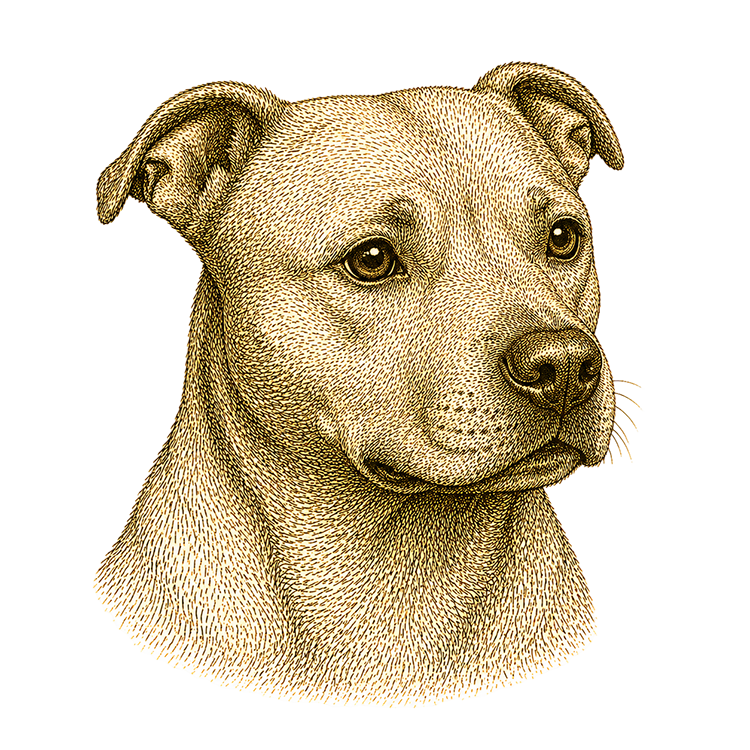
Staffordshire Bull Terrier Training & Temperament: Complete Breed Guide
Staffordshire Bull Terriers were developed in 19th-century England from Bulldog–terrier crosses. They were bred for strength, determination and courage, and those traits still shape the breed today. Understanding that background helps explain both why Staffies are such powerful dogs to live with and why they need thoughtful handling.
Staffies were selectively bred to be safe around people, and human aggression was actively removed from breeding lines. As a result, well-bred, well-raised Staffies are typically affectionate, people-oriented dogs who form strong bonds with their families. Like any breed, they still need supervision with children.
This guide is about living with a Staffie as a family companion. The challenges owners encounter - intensity, physical strength, high arousal, prey drive and, in some dogs, dog selectivity - are traits that once had a purpose. In a modern home, they need channelled rather than suppressed.
Staffies combine terrier persistence with bull-breed power. They’re emotionally sensitive, bond deeply, and respond extremely well to positive reinforcement, but impulse control doesn’t come naturally. With structure, training and realistic expectations, they’re not just manageable - they’re outstanding dogs to live with.
Oh, and I’ve got to admit, there may just be a little element of bias here - I’m lucky enough to share my life with a Staffie, Ziggy Staffdust - otherwise know as ‘the bringer of joy’.
Training approach for Staffordshire Bull Terriers
-
Like all dogs, Staffies don’t respond well to being pushed around - not because they’re fragile (they’re veritable powerhouses) but because pressure tends to wind them up rather than settle them. When a Staffie feels confronted, arousal goes up fast. That’s when pulling, jumping, vocalising or bulldozing behaviour escalates instead of improving. You don’t get calm compliance; you get more intensity.
Reward-based training works with Staffies because it gives them something clear to aim at. They’re dogs who like a job, like feedback, and like knowing when they’ve got it right. When training is built around rewards, Staffies tend to lean in rather than brace against you. You’re not dampening their drive - you’re giving it direction.
Another reason positive methods suit the breed is how strongly Staffies attach to their people. They’re not aloof thinkers or independent workers. They care deeply about the relationship, and when that relationship feels safe and predictable, training flows much more easily. When it doesn’t, behaviour tends to unravel.
Staffies also bring a lot of enthusiasm to everything they do. That’s part of their charm, but it means training isn’t about motivation - it’s about containment. Reward-based work allows you to shape calm, control and disengagement without flattening the dog’s personality. Done well, you end up with a Staffie who’s still full of life, just easier to live with.
-
Staffies can flip from calm to fully switched-on in seconds. Doorbells, movement, play, other dogs - excitement rises fast, and without support they struggle to bring themselves back down. Day-to-day training is less about teaching cues and more about helping them practise calming themselves.
Their strength changes everything. A Staffie who pulls or launches isn’t being naughty - they’re compact, muscular, and very committed to whatever’s caught their interest. Lead skills need to be taught early and carefully, because once the muscle arrives, brute force stops being an option.
Dog social behaviour also needs realistic expectations. Some Staffies stay social, others become selective as they mature. Calm neutrality matters far more than forced interaction. A Staffie who can ignore other dogs is often easier to live with than one who feels obliged to say hello.
Recall improves with maturity, but distractions - especially fast movement - can still override training. Management during adolescence is part of responsible ownership. Expect progress, not perfection.
Handled well, that intensity is exactly what makes Staffies such rewarding dogs. They give everything - training can be a joy - and when that energy is channelled, living with one is an absolute pleasure.
-
Staffordshire Bull Terrier puppies are primed for learning from the moment they come home. The early weeks, roughly up to 16 weeks of age, are when they take in new experiences most easily and form strong emotional associations. This is the period where confidence is built, or lost ,and it’s far more influential than many owners realise.
Early work isn’t about drilling cues. It’s about foundations: learning their name, settling around people, gentle mouth use, early recall habits, toilet training, and coping with everyday life without tipping into over-arousal. These skills shape how manageable a Staffie becomes as their strength and intensity increase.
More structured training - things like lead skills, duration behaviours, and clearer cue work - usually comes together once the puppy has settled into the home, often around 12–14 weeks. By then, attention and engagement are easier to work with, and training feels less like management and more like teaching.
With adolescent or adult Staffies, the same principles still apply, but the timeline changes. You’re often training through existing habits rather than starting with a blank slate. Adolescence, typically somewhere between 6 and 18 months, brings a predictable spike in arousal and a dip in reliability. Behaviours that looked solid can unravel temporarily. It can feel like you’re failing (I’ve questioned my own ability as a trainer sometimes!), but it’s not- teenagers will be teenagers and that’s all the more noticeable in a tank in dog form!
Q & A
-
Every single Staffies I’ve ever trained seems to have Kangaroo genes. Staffies jump up because they’re highly people-focused and seek close physical contact. When excitement spikes, impulse control drops away, and jumping becomes the fastest way to reach a person. And In a compact, muscular dog, that enthusiasm has real impact - cute when they’re younger, but can get really problematic when they’re mature, not least because of the negative reputation the breed often gets saddled with.
Addressing the issue from a training perspective is all about emotional regulation and impulse control. Staffies don’t naturally moderate excitement around people, especially during adolescence when confidence and physical power increase faster than self-control. If greeting behaviour isn’t shaped early, jumping quickly becomes the default because it reliably earns attention.
Adolescence is when this really shows. Between roughly six and nine months, strength increases, excitement escalates, and behaviours that looked under control suddenly reappear. But progress comes from teaching a different way to get what the dog wants - attention and interaction - rather than trying to suppress the behaviour through force. Calm, predictable greetings and consistent responses from everyone matter far more than correction. Staffies don’t simply grow out of jumping, but with clear expectations and steady training, they do learn to keep all four feet on the floor….eventually! It just takes the three P’s - Practice, Patience and Persistence.
-
Staffordshire Bull Terriers use their mouths more than many breeds, and it catches people off guard. Part of that is just normal puppy behaviour - puppies investigate everything with their mouths - but with Staffies it tends to last longer and show up more intensely. Combine teething, excitement, and developing impulse control, and you get a dog who grabs sleeves, hands, leads, toys - sometimes all in the same minute. It looks dramatic, but it isn’t aggression.
Nipping usually peaks between about three and seven months, then flares again whenever arousal runs high. Tired puppies mouth more. Overstimulated puppies mouth more. Puppies who don’t yet know how to regulate themselves mouth most of all. As I know only too well, a Staffie who’s excited doesn’t half-do things - they throw themselves into it.
The goal isn’t to eliminate mouth use, because that’s unrealistic for this breed - they were bred to bite! The aim is to shape the behaviour. Staffies need clear outlets for using their mouths appropriately, plenty of chances to practise calm interaction, and consistent feedback about what earns attention and what makes it disappear. Teaching skills like drop, leave it, and settling early makes a big difference as strength increases.
Most Staffies do improve naturally as impulse control develops, usually somewhere between a year and eighteen months, but only if they’ve been taught how to manage that enthusiasm along the way. Because they grow into such solid, powerful adults, the work you do around mouth control in puppyhood really matters - it’s much easier to guide a learning puppy than to undo habits once the dog is fully grown.
-
Staffordshire Bull Terriers pull because they move through the world with their whole body switched on. They’re highly responsive to movement, people, dogs, and smells, and once their arousal rises, their ability to self-regulate drops quickly. Walking calmly beside a human isn’t instinctive for a breed that was selected for intensity, persistence, and physical engagement. As I know only too well, when something catches a Staffie’s attention, their feet go before their brain catches up.
Lead pulling usually worsens through adolescence as arousal increases faster than impulse control can keep up. Muscle develops, confidence grows, and suddenly the behaviours that were manageable at five months feel much bigger at eight or nine.
Loose-lead walking improves when the dog learns that calm movement keeps the walk going. That means practising when arousal is low, rewarding moments of slack lead generously, and keeping sessions short enough that the dog can actually succeed. Management still matters while the skill is developing - front-clip harnesses can reduce the dog’s ability to rehearse pulling without turning the walk into a physical contest.
Progress with Staffies isn’t quick or linear. You’ll often see improvement, followed by setbacks, especially during adolescence. With consistent, low-conflict training and realistic expectations, most Staffies can learn to walk politely - but it’s a skill that’s built over months, not fixed in a few sessions.
-
Staffordshire Bull Terriers don’t usually need endless exercise - they need the right kind. Around 60–90 minutes of activity a day suits most adults, but how that time is used matters far more than the total.
Physical movement is important, but on its own it often isn’t enough. Staffies are people-focused, intense dogs who stay more settled when their brains are involved as well as their bodies. Training, scent games, problem-solving and interactive play take the edge off in a way extra walking rarely does.
Some activities can actually make things worse. Repetitive ball throwing, in particular, tends to wind many Staffies up rather than calm them down. The chasing boosts arousal and adrenaline, so the dog comes home tired but overstimulated, struggling to switch off. Mixing movement with pauses, thinking, and engagement produces a much calmer result.
Adolescence (roughly 6–18 months) is when this balance matters most. Increasing exercise to “burn it off” often just creates a fitter, more driven dog. The goal isn’t exhaustion - it’s meeting physical needs while also teaching recovery and calm between activities.
When exercise is balanced properly, Staffies are usually very capable of relaxing at home. When it isn’t, the behaviour problems people blame on “too much energy” are often a sign that the dog needs more engagement, not more miles.
-
taffordshire Bull Terriers are often brilliant with children when they’re raised with clear boundaries and sensible supervision. They’re affectionate, people-focused dogs who tend to form strong bonds with family members and genuinely enjoy being involved in everyday life. This is where the old “nanny dog” label comes from - not because they were ever literal carers for children, but because well-raised Staffies are typically tolerant, patient, and deeply attached to their people.
The main consideration isn’t temperament, it’s physics. Staffies are solid, muscular dogs who greet and play with their whole body. An enthusiastic Staffie can easily knock over a small child without meaning to, and normal puppy mouthing can feel intense simply because of jaw strength and persistence. That’s about managing excitement, not worrying about aggression.
Children running, squealing, or wrestling can quickly push arousal too high, so Staffies do best when play is calm, structured, and regularly interrupted with breaks. They also need somewhere they can retreat to when they’ve had enough, without being followed or climbed on.
With supervision, clear rules for both dog and child, and early work on calm behaviour, Staffies can be affectionate, joyful family dogs. The “nanny dog” label may be historically shaky, but the reality behind it - that this breed can be wonderful with children - absolutely holds true when the adults set things up properly.
-
Staffordshire Bull Terriers are strongly people-oriented, but that doesn’t mean they’re automatically bad at being left alone. In fact, many Staffies cope perfectly well with normal absences once they’ve learned that alone time is just part of everyday life, not something dramatic or unsettling.
Where problems tend to show up with this breed isn’t quiet panic, but frustration. A bored, under-occupied Staffie with time on their hands is far more likely to chew, pace, or vocalise than a dog who’s genuinely distressed. That kind of behaviour often starts the moment the house goes quiet and disappears once the dog has something to focus on - which tells you a lot about what’s really going on.
Staffies usually settle best when alone time has been introduced gradually and without fuss. Calm departures, predictable routines, and something safe to occupy them suit the breed well. They’re physical dogs with powerful jaws, so they tend to do better with durable chews or enrichment that gives them a clear job while you’re out.
It’s also worth being realistic about what you’re seeing. Destruction during adolescence, food-seeking behaviour, or restlessness after a low-activity day are very common in Staffies and don’t point to separation anxiety. True anxiety looks different - sustained distress, escape attempts, or inability to settle at all - and needs proper professional support.
For most Staffordshire Bull Terriers, learning to be alone is about structure and routine, not fixing a deep emotional problem. When their daily needs are met and independence is taught sensibly, they’re usually far more capable than their “velcro dog” reputation suggests.
-
Dog-selectivity (being friendly with some and not with others) is part of the breed picture and it’s best understood clearly rather than avoided. Many Staffies remain sociable with other dogs throughout their lives. Others become more selective as they mature - happy with familiar dogs, more cautious with strangers, or comfortable with some dogs but not others. A smaller number do develop broad intolerance despite good early input.
Genetics matter here, but they aren’t the whole story. Early, well-managed exposure to calm, appropriate dogs during puppyhood reduces the likelihood of later problems and helps puppies learn how to disengage calmly. What socialisation can’t do is guarantee lifelong dog sociability. As Staffies reach social maturity - often somewhere between 12 and 24 months - preferences and boundaries become clearer, and some dogs simply become choosier.
What’s important is recognising tension early and responding sensibly. A Staffie who stiffens, fixates, or struggles to disengage around other dogs isn’t being “bad” - they’re communicating discomfort. Managing arousal, avoiding overwhelming situations, and rewarding calm behaviour around dogs go a long way toward keeping things stable. For some individuals, ongoing management is part of responsible ownership, not a failure.
Handled honestly and proactively, dog-selectivity doesn’t stop Staffies living full, happy lives. It just means accepting the dog in front of you, working within their comfort zone, and prioritising safety and clarity over forcing sociability that isn’t natural for them.
-
Staffordshire Bull Terriers often look straightforward to train at first. They’re engaged with people, quick to pick things up, and usually keen to interact. In calm settings, they can appear almost effortless - cues land quickly, rewards matter, and they enjoy the interaction itself.
The difficulty shows up when intensity enters the picture. Staffies don’t half-do things. When something matters to them - a dog, movement, play, a smell - they commit fully. That same determination that makes them focused training partners can make disengaging from excitement genuinely hard work. Training doesn’t fall apart because the dog “forgets”; it falls apart because their emotional gear has shifted.
For this breed, regulation matters more than instruction. A Staffie who’s calm can do almost anything you’ve taught them. A Staffie who’s over-aroused often can’t access even well-known behaviours. Learning how to pause, reset, and come back down from excitement is a bigger piece of the puzzle than adding more cues.
Maturity adds another layer. As Staffies reach social adulthood, their tolerance for other dogs often changes, which can make public training more complex. Sessions that were once easy suddenly involve managing proximity, movement, and emotional load at the same time.
Despite their solid build, Staffies aren’t resilient to pressure. They don’t respond well to being pushed, corrected, or physically managed into compliance. Trust matters. When training stays clear, fair, and reward-based, they tend to stay engaged and willing. When it doesn’t, you often see resistance, frustration, or shutdown rather than improvement.
Staffies sit in an awkward middle ground. They’re not as automatically cooperative as retrievers, and not as independently minded as some other terrier breeds, but they bring intensity to everything they do. Training them well isn’t about force or repetition - it’s about timing, emotional awareness, and working with a dog who brings their whole self to the table, every single time.
-
Staffordshire Bull Terriers have a tough public reputation, but aggression toward people is not a breed trait. In fact, the opposite is true by historical selection. Dogs that showed human aggression were dangerous liabilities to handle and were removed from breeding. That pressure favoured dogs that were tolerant of people, physically handled easily, and strongly bonded to humans - which is why well-bred, well-raised Staffies are typically affectionate, people-focused dogs.
That doesn’t mean problems never occur. Like any breed, a Staffie can show defensive behaviour if something has gone wrong. Fear from poor or missed socialisation, chronic pain or injury, harsh handling, or repeated stress can all push a dog to protect themselves. When a Staffie snaps or bites in these situations, it isn’t “breed aggression” - it’s a normal response from a dog that feels unsafe, hurt, or under threat.
In practice, concerning behaviour toward people in Staffies most often links back to fear, pain, or resource-related conflict rather than hostility. These are issues of experience, health, and management, not genetics. Because Staffies are powerful dogs, any signs of aggression toward people should always be taken seriously and assessed properly, ideally with both veterinary input and a qualified behaviourist.
The key point is this: Staffordshire Bull Terriers are not inherently aggressive to humans. When problems appear, they’re almost always signals that something is wrong - not evidence of a dangerous breed.
-
Staffordshire Bull Terriers don’t come into the world calm around other dogs - quite the opposite. As youngsters, they tend to be full-on, physical, and intense in their play. Watch two Staffie puppies together and you’d be forgiven for thinking World War Three has broken out. It’s noisy, dramatic, all bodies and mouths and enthusiasm, and very rarely subtle. That early intensity is normal for the breed.
As many Staffies mature, their relationship with other dogs changes. The chaotic puppy play often gives way to clearer preferences and firmer boundaries. Some become calmer and more selective, enjoying familiar dogs while losing interest in random greetings. Others remain social but far less tolerant of rude or overbearing behaviour. This shift is part of social maturity, not a training failure.
What matters is recognising that early “anything goes” behaviour doesn’t always last. Pushing constant dog interaction because a young Staffie seems sociable can backfire later. Allowing space, rewarding calm behaviour around other dogs, and accepting that not every Staffie wants a busy social life helps prevent problems developing as they grow up.
Understanding this trajectory - intense early play followed by greater selectivity - is key to managing Staffies honestly around other dogs, without panic or denial.
Is a Staffordshire Bull Terrier right for you?
-
You want an affectionate, loyal companion who thrives on human connection. Staffordshire Bull Terriers seek constant proximity - on walks, on the sofa, in your business. If you want a dog who's independent or content being left alone frequently, a Staffie isn't right.
You can provide 60-90 minutes of daily exercise plus mental stimulation. Staffies need physical work and mental engagement. Under-exercised, under-stimulated Staffies develop serious behaviour problems. Tug games, scent work, training, and vigorous play channel their energy productively.
You're committed to positive reinforcement training and have patience for an intense, powerful breed. Staffies respond brilliantly to reward-based training but need consistency, impulse control work, and arousal management from puppyhood. If you want a dog who's naturally calm or instantly obedient, choose a different breed.
You understand and accept the breed's history and potential for dog-selectivity. Not all Staffies become dog-reactive, but the possibility exists. Early socialisation reduces risk significantly. Some individuals require lifelong management around other dogs. If guaranteed dog-friendliness is essential, choose a breed without this genetic history.
You can handle public prejudice and breed stereotypes. Well-trained Staffies face unfair assumptions based on appearance and historical reputation. Responsible ownership includes training your dog to challenge those stereotypes through calm, friendly, well-managed behaviour in public. If you're uncomfortable being a breed ambassador, this might not be the right choice.
You live in an environment where the dog can exercise properly. Staffies need secure outdoor spaces for running and playing. Urban living works if you can access parks regularly. They adapt well to flat living if exercised adequately. Purely indoor living creates a frustrated, destructive dog.
-
You need a dog who can be left alone for 8+ hours daily. Staffies form profound attachments and struggle with long periods of isolation. If your lifestyle requires the dog to be alone frequently, a more independent breed copes better.
You want guaranteed friendliness with all dogs. While many Staffies live happily with other dogs, the breed carries genetic potential for dog-selectivity. If reliable, lifelong dog-friendliness is essential (dog parks, daycare, multi-dog household), choose a breed without this history.
You prefer minimal training input or want a naturally calm dog. Staffies require consistent training, impulse control work, and arousal management throughout adolescence (6-18 months minimum). If you want a dog who's easy from the start, choose a less intense breed.
You're uncomfortable with physical strength and power. Staffies are extraordinarily strong for their size. Managing pulling, jumping, and physical enthusiasm requires training that starts early and continues through adolescence. If strength management concerns you, choose a smaller or less powerful breed.
You want a dog who's universally welcomed. Some landlords, insurance companies, and countries restrict or ban Staffordshire Bull Terriers based on breed stereotypes. Housing, travel, and insurance can be complicated. If this level of restriction is unacceptable, choose a breed without legislative restrictions.
You can't commit to thorough early socialisation. Inadequate socialisation significantly increases the risk of fear-based behaviour and dog-reactivity. If you can't prioritise socialisation from day one, choose a less sensitive breed.
If you're in Brighton and Hove and want structured guidance for training your Staffie, my Puppy Foundation and Teen Reset programmes can help. Or check out my free Puppy Primer or Terrible Teen Survival guides for a practical starting point.