
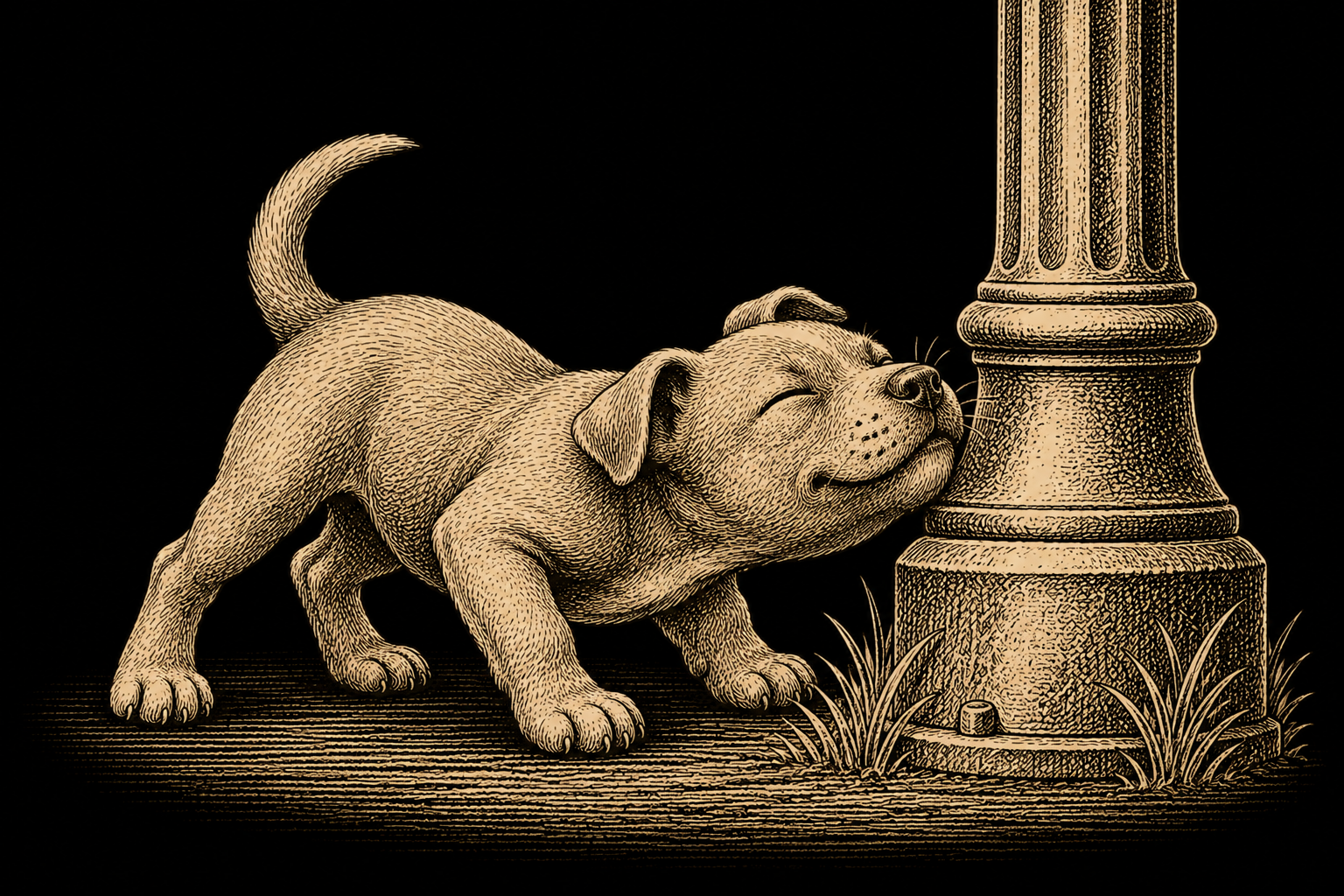
We've all seen it on a morning walk. Someone is striding along with the lead in one hand and a coffee in the other, and every time their dog slows down to investigate a gatepost or a tuft of grass, there's a quick tug and they're off again.
It's easy to see why it happens, because we've usually got somewhere to be and a dog who stops every few steps can test anyone's patience. Yet that pause to sniff is the part of the walk that matters most to the dog, and giving them more of it is one of the simplest things we can do for them.
The short answer
Yes, and as much as you reasonably can. Sniffing is how dogs make sense of the world and it's one of the highlights of their day. Giving them time for it is good for their wellbeing, and with a little structure it needn't turn your walks into a tug of war.
Why does my dog sniff everything?
A dog's nose has between 220 and 300 million scent receptors, and a big chunk of their brain is given over to making sense of what those receptors pick up. That makes a lamppost or a clump of grass something like the local news. From another dog's urine, for example, a male dog can tell whether it was left by a female in season. Scents also fade over time, and it's been suggested that dogs use that fading to judge roughly how long ago another dog came past, though that idea hasn't been properly tested yet. For a puppy all of this is brand new, which is why a young dog can spend ages investigating a single leaf.
Why should I let my dog sniff?
The walk is often a dog's main chance each day to explore beyond their own home and garden, and their nose is how they do it. Hurrying them past every interesting smell takes away a big part of what the walk is for, from their point of view.
There's some evidence that sniffing does them good, too. Dogs who did regular nosework for a fortnight became more optimistic in a follow-up test, and a field study found that dogs' pulse rate dropped while they sniffed on walks, with longer leads giving them more chance to do it.
Won't letting my dog sniff make lead pulling worse?
It can, if the way your dog gets to sniff is by pulling towards the smell. Every time pulling gets them to the good stuff, pulling is what they learn. The answer is to put sniffing on cue and hand it out as a reward. A few steps of loose lead earns a "go sniff", and suddenly the thing your dog wants most on a walk is working for you. Trainers call this the Premack principle, and sniffing is one of the most powerful rewards there is because it's available on every walk and your dog never gets tired of it.
Signs your dog might need more sniff time
None of these on their own means anything is wrong, but if a few of them sound familiar, more sniffing is a good place to start.
Walks feel like a race, with pulling from the moment you leave the house
Your dog comes home from a long walk still wired and struggles to settle
They hoover up every smell frantically the moment they get the chance
They get frustrated on the lead, barking or lunging when you move them on from a smell
They find plenty of their own nose work at home, in the bins, the laundry basket or your bag
How to give your dog a better sniff walk
Use a longer lead. A three to five metre long line clipped to a well-fitted harness gives your dog room to explore without you being pulled along. Avoid retractable leads, which keep constant tension on the lead and make loose lead walking harder to teach.
Teach a sniff cue. Start in the garden or a quiet spot. Say "go sniff" (or whatever word you like) and then let your dog investigate. Before long the cue tells them they're free to explore.
Use sniffing as a reward for a loose lead. Ask for a few steps beside you, then release with your sniff cue. Gradually build up how far you walk before each release.
Let them finish. Where it's safe, wait until your dog lifts their head before moving on. Being hurried away from a smell halfway through is frustrating, and frustration tends to come out as pulling.
Plan a regular sniffari. Pick a quiet route and let your dog choose the pace and, within reason, the direction. Twenty minutes of pottering often leaves a dog more settled than an hour of marching, and distance doesn't matter at all.
Keep puppy outings slow. A young puppy gets far more from a few minutes of exploring a patch of grass than from covering ground, so let them set the pace.
Bring the nose home. Scatter feeding, simple "find it" games and snuffle mats give your dog the chance to use their nose on days when walks are short or the weather is grim.
The Dog's Honest Truth
A sniffy walk rarely looks impressive. You might cover half a mile in forty minutes and spend a good chunk of it standing by a hedge while your dog reads every word of it. But a walk is your dog's main chance each day to do the thing they're best at, and giving them the time to do it pays you back with a calmer, more contented dog who is easier to live with at home.
If walks with your dog have turned into a tug of war, or they come home more wound up than when they left, that's exactly the kind of thing we work on together. Have a look at Puppy Foundations for young puppies and Teen Resets for adolescent dogs, or get in touch and we'll find the right fit.
Sources
Fear Free Happy Homes. Nose Work Is Scentsational for Dogs
Your Dog (Tufts). Giving Your Dog Time to Sniff on Walks Will Literally Soothe His Heart
Psychology Today. Can Dogs Smell Time?