
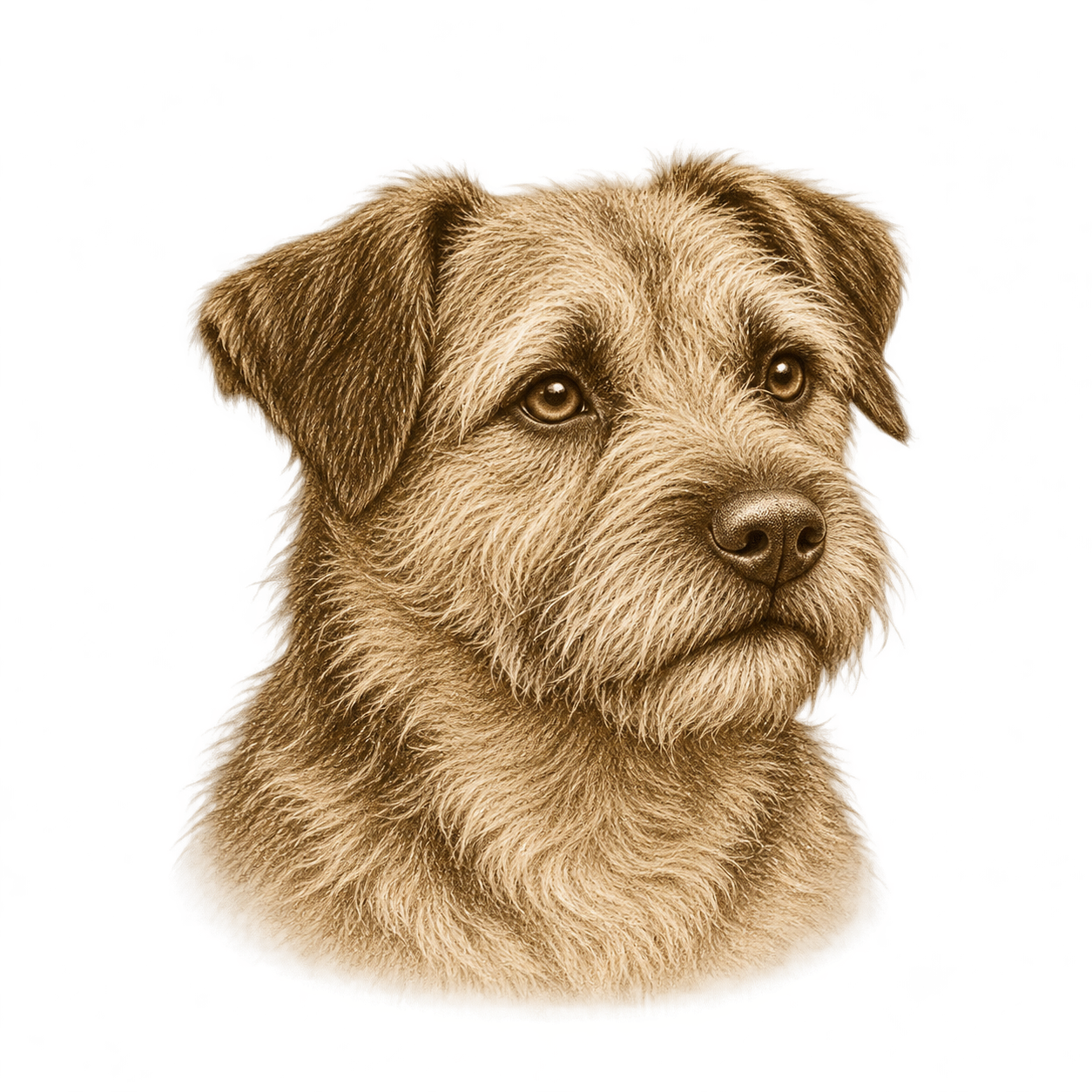
Border Terrier Training & Temperament: Breed Guide
The Border Terrier comes from the rough hill country where Northumberland meets Scotland. Farmers and huntsmen there needed a terrier that could run with the foxhounds all day and then go to ground to bolt a fox, and families like the Robsons and the Dodds bred for exactly that. Early on they were known as Coquetdale or Redesdale Terriers, after the valleys they came from, before taking their name from the Border Hunt. The Kennel Club recognised the breed in 1920.
Looks were never the priority. The breed standard still describes a working terrier able to follow a horse, with legs long enough to keep up, a body narrow enough to be spanned by a pair of hands and squeeze down an earth, a head likened to an otter's and a harsh, weatherproof coat.
That background still shows in the Borders you meet on the seafront today. They tend to be friendly, adaptable and very affectionate with their people, often a little softer than some of their terrier cousins, but there's a determined hunter under that scruffy coat. Expect a keen nose, a love of chasing anything that runs and remarkable stamina for a small dog.
Training approach for Border Terriers
-
Border Terriers were bred to work alongside people while still making their own decisions underground. They're generally keen to please and quite sensitive to tone, so harsh corrections can leave a Border wary and withdrawn, and if training turns into a battle they're more than capable of digging their heels in.
Rewards give you a dog who wants to work with you. Food goes a long way with most Borders, and short sessions that mix treats with games of tug and chase suit their enthusiasm. Their attention can drift once something smells more interesting, so keep sessions brief and finish while they're still keen.
-
A Border's nose is one of the best things about them and also the biggest test of your recall. Build it in quiet places first, use a long line on walks near woodland, farmland or rabbit warrens, and reward generously every time they choose to come back to you.
Start handling work early. The coat is usually hand-stripped a couple of times a year, which means standing still on a table while someone plucks out the dead hair, so teach your puppy that being touched, lifted, brushed and examined leads to good things.
Give the chase instinct somewhere to go. Flirt pole games, scent work and hunting for hidden toys let a Border use the skills they were bred for in ways that work for you.
Teach calm alongside all that activity. Borders will happily keep going for as long as you let them, so a settle on a mat and plenty of daytime rest help you avoid an overtired, wired puppy in the evenings.
-
Start as soon as your puppy comes home with name games, gentle handling and short focus sessions at mealtimes. Once your vet says it's safe to go out, let them watch livestock, cats and wildlife from a comfortable distance, rewarding them for looking calmly and then turning back to you.
Somewhere between six and eighteen months your Border will go through adolescence, and this is often when the nose really takes over. A puppy who stuck to your side can suddenly find every hedgerow fascinating, so keep the long line on and carry on rewarding check-ins until they come out the other side.
Q & A
-
Grabbing and shaking is part of the hunting sequence, so it's completely natural and well worth using in training. Tug games with clear start and stop cues, toys on a flirt pole and a game as the reward for recall all put it to good use. Keep squeaky toys for supervised play, as a determined Border can have the squeaker out (and swallowed) in minutes.
-
An adult Border can manage long country walks with ease, which makes sense for a dog bred to keep up with horses. Puppies need far less, and short outings with lots of sniffing and plenty of sleep will do them much more good than long walks. Build up gradually as they mature, and remember that a sniffy wander on a long line can tire them out more than a brisk march on a short lead.
-
They're often described as one of the gentler terriers, and many are affectionate, sociable and happy to curl up with you in the evening. They're still terriers, though, with plenty of stamina, a keen nose and a strong urge to chase. A Border who doesn't get enough to do will soon find their own entertainment, so plan for daily exercise, sniffing and brain games alongside the cuddles.
-
Borders have a well-earned reputation as escape artists. They can squeeze through surprisingly small gaps, dig under fences and scramble over low walls when something interesting is on the other side. Check your boundaries at nose height and below, block any gaps along the bottom of fences, and avoid leaving them alone in the garden for long stretches, since boredom and a passing cat make a powerful combination.
-
Most pet Borders benefit from it a couple of times a year. Stripping removes the dead outer coat and keeps its harsh, weatherproof texture, whereas clipping cuts through it and tends to leave the coat softer and fluffier over time. It's comfortable for a dog who's used to it, so get your puppy happy standing on a table, being brushed and having their coat gently plucked, with plenty of treats, well before their first proper groom.
-
Many live happily with a cat they've grown up with, even if they'll still chase the neighbour's cat across the garden. Introduce them slowly, give your cat high escape routes and a dog-free room, and reward your puppy for looking at the cat calmly and then looking away. Small pets like rabbits, guinea pigs and rats are a different matter for a breed bred to hunt, so keep them well separated and never leave them unsupervised together.
Is a Border Terrier right for you?
-
You'd like a small, robust dog who'll join you on long walks and muddy adventures and be just as happy snoozing on the sofa afterwards. You don't mind a scruffy look, you're happy to keep on top of grooming and handling, and you enjoy a dog with a bit of independence and plenty of character.
-
You have small furry pets, or a garden that would be hard to make escape-proof. If you're hoping for a dog who'll reliably stay close off lead from the start, a Border's nose will make that a longer project. And if regular hand-stripping (and the occasional roll in something unspeakable) doesn't appeal, a different breed may suit you better.
If you're in Brighton and Hove and want structured guidance for training your Border Terrier, my Puppy Foundation and Teen Reset programmes can help. Or check out my free Puppy Primer or Terrible Teen Survival guides for a practical starting point.