
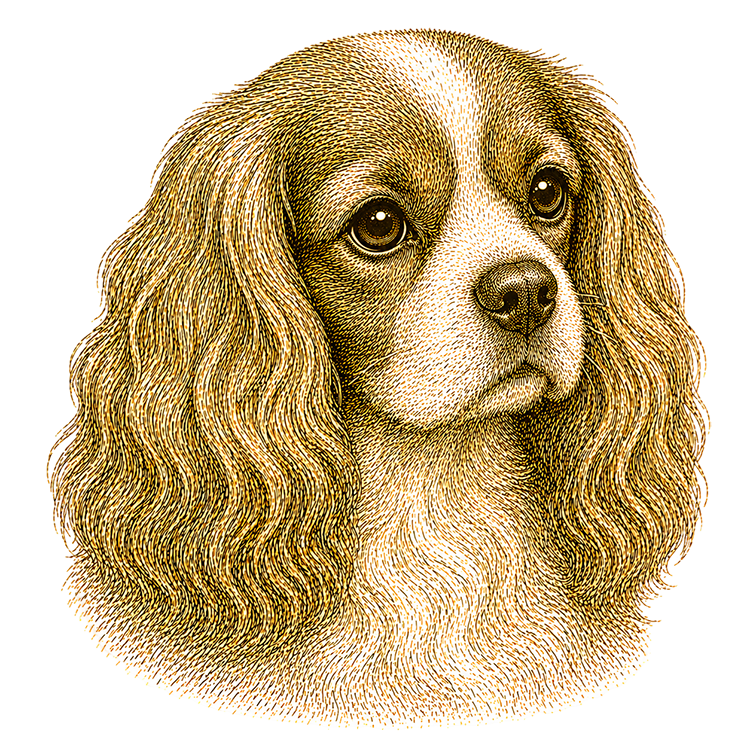
Cavalier King Charles Spaniel Training & Temperament: Complete Breed Guide
Cavalier King Charles Spaniels were developed primarily as companion dogs for British nobility. King Charles II was famously devoted to them, which is where the breed’s name comes from, and their purpose was simple: human company. That history produced a dog known for gentleness, affection, and a strong desire to stay physically close to their people.
What makes Cavaliers distinctive as a training proposition isn’t behaviour so much as health. Two inherited conditions are common enough to shape the realities of owning the breed. Mitral valve disease affects a very high proportion of Cavaliers during their lifetime, often appearing relatively early. Syringomyelia, linked to a malformation at the base of the skull, also occurs in a significant number of dogs and can cause chronic discomfort that is sometimes mistaken for a behaviour issue. These aren’t rare anomalies - they’re well-recognised breed-wide concerns that responsible ownership means planning for.
Temperamentally, Cavaliers are gentle and biddable dogs who respond well to patient, reward-based training. The main challenges owners face are usually practical rather than behavioural: managing health, building independence so the dog can cope with being alone, and understanding the realities of the breed before committing to one.
Training approach for Cavalier King Charles Spaniels
-
Cavaliers were bred for one thing above all else: being close to people. Generations of selection for companionship produced a dog who reads human mood closely and genuinely wants to get things right. That sensitivity is exactly why reward-based training suits them so well. A Cavalier who's rewarded for the behaviour you want will happily offer it again, and they tend to stay soft and willing throughout their lives when training is built on trust.
The flip side of that sensitivity is that harsh handling lands hard on this breed. Cavaliers don't shrug off corrections the way a more robust dog might. Raise your voice or reach for aversive methods and you're likely to end up with a worried, shut-down dog. What looks like defiance in a Cavalier is far more often worry, and pushing harder just deepens it.
There's a health dimension here too, and it's worth understanding before you start. Because syringomyelia can cause discomfort around the head, neck, and shoulders, some Cavaliers are genuinely sensitive to touch or handling in those areas, and that has nothing to do with temperament or stubbornness. Forcing a dog through that discomfort, or telling them off for flinching, does real harm. Reward-based training lets you build handling tolerance gently and, just as importantly, lets you notice when a reaction might be physical rather than behavioural.
Food motivation is generally good in Cavaliers, which makes life easier. They'll work for treats, they enjoy the interaction, and short, upbeat sessions play to their strengths. Keep training gentle, keep it positive, and you'll get a dog who genuinely enjoys learning with you.
-
For most breeds I'd start by talking about channelling their working drive. Cavaliers are the exception, because they were never bred to work. Their whole purpose was companionship, and that shapes where the training effort needs to go.
The single biggest priority is building independence. A dog bred to be a constant companion doesn't naturally cope with being left alone, and separation-related distress is genuinely common in this breed. This is the thing to get ahead of from the very first week, long before it becomes a problem. Short, calm, predictable absences from day one, gradually extended, teach a Cavalier that being alone is nothing to worry about. Leaving it until you go back to work or the dog starts panicking makes the job much harder. If you do nothing else with a new Cavalier puppy, work on this.
The second priority is house training, which tends to take longer with Cavaliers than people expect. Small bladders, a sensitive nature, and a low-slung body that isn't keen on wet grass all play a part. There's nothing wrong with your dog if it takes a while. Consistency, frequent trips out, and patience get you there, usually over three to six months.
Then there's the ordinary adolescent stuff, which does still arrive, just in a milder form than you'd see in a Springer or a Labrador. Expect some jumping up, a bit of lead pulling, and recall that goes selective around an interesting smell or another dog, somewhere between about six and eighteen months. Attention-seeking can ramp up too, because attention is what this breed lives for. None of it is dramatic, and consistent, gentle training carries you through.
Running underneath all of it is health awareness, and this is where Cavaliers really do ask something extra of their owners. A behaviour that looks like fussiness or anxiety can sometimes be discomfort. A dog who's reluctant to walk, who scratches at the air near their neck or shoulder, who suddenly resists having their harness put on, or who seems touch-sensitive around the head, may be telling you something physical is going on. Syringomyelia and heart disease can both affect how a dog behaves and how much they can comfortably do. Part of training a Cavalier well is staying curious about whether a problem is behavioural at all, and being ready to involve your vet when something changes.
-
Straight away, gently. That fluffy little bundle arriving at eight weeks is soaking up information every single day, and the sooner you help them make sense of the world, the better. With Cavaliers, the emphasis in those early weeks sits on two things rather than on drilling cues: building the ability to be alone, and making sure early handling and new experiences are positive.
Independence training genuinely does start on day one. It feels counterintuitive to leave a tiny puppy alone even for a few minutes when all you want to do is cuddle them, but those short, calm separations are one of the kindest things you can teach this breed. A Cavalier who learns early that alone time is safe and unremarkable is far less likely to struggle later.
Socialisation matters just as much, with the key window running from around three to sixteen weeks. Cavaliers are usually friendly, gentle souls, and that gentleness cuts both ways. They can be overwhelmed or genuinely hurt by bigger, bouncier dogs, so early experiences with other dogs need to be calm and well-matched. The aim is a puppy who finds the world safe and manageable, without being flooded by too much too soon.
Formal training can begin as soon as your puppy has settled in, kept to short, happy sessions of a few minutes. Cavaliers don't need heavy repetition and can lose heart if training starts to feel like hard work, so keep it light and rewarding.
For an adolescent or adult Cavalier, you can start whenever you like, and progress is usually straightforward with this willing breed. If separation struggles are already established, that's the piece that takes the most time and patience, and it's the area where getting proper support pays off most.
Q & A
-
Because that's precisely what they were bred to do. Cavaliers spent centuries being selected purely for companionship, with no working job to pull them away from their people. Wanting to be on your lap, to follow you from room to room, and to be in the middle of whatever you're doing is the breed doing exactly what it was designed for. There's no fault in it and nothing to fix.
For the most part it's one of the loveliest things about them. It only becomes a worry when that closeness tips into an inability to cope with any separation at all. The kind approach is to enjoy the companionship while also teaching your dog, gently and from early on, that being apart from you for a while is safe and normal. A Cavalier can be utterly devoted and still be comfortable alone. It just takes some deliberate early work to get there.
-
Separation-related distress is common in Cavaliers for a very straightforward reason: they were bred to be constant companions and never to be left. Being alone doesn't come naturally, so for a lot of these dogs it's a skill that has to be taught rather than something they simply grow into.
The signs usually appear soon after you leave: vocalising, pacing, chewing around doorways, or just not settling at all. It's worth understanding that this is genuine distress rather than naughtiness or spite, so punishment has no place here and tends to make things worse.
The way through is gradual. Start with very short absences your dog can actually cope with, even just stepping out of the room, and build the time up slowly so they're never tipped into panic. Keep departures and returns low-key rather than emotional. Give them something worthwhile to settle with as you go. For many Cavaliers this is three to six months of patient work, and some need ongoing management, so give yourself a realistic timeframe. If your dog is genuinely panicking, it's well worth getting a qualified trainer or behaviourist involved early rather than struggling on alone, because separation issues are much easier to help before they're deeply entrenched.
-
Scratching at the air near the neck or shoulder, sometimes without actually making contact, is a recognised sign of syringomyelia, a condition that's sadly common in the breed. Other things to watch for are sensitivity to touch around the head and neck, yelping for no obvious reason, reluctance to jump or do stairs, and a general discomfort that seems to come and go.
I mention it because owners sometimes read these behaviours as fussiness, disobedience, or anxiety and try to train them away, when what the dog actually needs is a vet. If you're seeing any of this, please get your Cavalier checked over properly before assuming it's behavioural. It might turn out to be nothing worrying, but it's exactly the kind of thing worth ruling out early.
-
Moderate is the honest answer, usually somewhere around forty-five minutes to an hour a day, split into a couple of outings. They enjoy a potter and a sniff far more than a route march, and gentle, varied walks with time to explore suit them nicely.
The important caveat is health. Both the heart disease and the neurological problems the breed is prone to can affect how much a dog can comfortably manage, and that varies a lot from dog to dog. Watch for signs that exercise is becoming too much: tiring quickly, lagging behind, coughing, or a reluctance to set off at all. A Cavalier flagging on walks isn't being lazy, and it's worth mentioning to your vet. For a healthy young Cavalier, though, moderate daily exercise plus a bit of sniffing and gentle brain work is plenty to keep them happy.
-
They can be slower than a lot of breeds, so don't be disheartened if it takes a while. A few things stack up: small dogs have small bladders, the breed's sensitive nature means harsh reactions to accidents backfire badly, and being low to the ground makes cold, wet grass genuinely off-putting on a miserable morning.
None of that means your dog is being difficult or that you're doing something wrong. Consistency is what gets you there. Frequent trips outside, especially after sleeping, eating, and playing, generous praise when they get it right, calm cleaning-up when they don't, and patience. Most Cavaliers are reliably house trained within three to six months, some a little longer, and getting cross about the setbacks only slows things down.
-
Generally, yes. They're gentle, affectionate, tolerant dogs who tend to enjoy being part of family life, and their soft nature means they're rarely bothered by the ordinary chaos of a household. That gentleness is a big part of why families love them.
The care needed runs slightly the other way with this breed. Because Cavaliers are small and soft, the priority is protecting the dog as much as teaching the children. Rough handling, being picked up constantly, or being caught up in boisterous play can overwhelm or even hurt them, and their health issues mean they don't always cope well with rough treatment. Teach children to be calm and gentle, give the dog a quiet space to retreat to, and supervise interactions with younger kids. Get that right and a Cavalier is a wonderful family companion.
-
Some are, though it's rarely the relentless barking you get in more driven breeds. When a Cavalier barks a lot, it's usually about attention or about being left, both of which trace back to how people-focused the breed is. A dog who's learned that barking brings you running will keep doing it, and a dog who's anxious about being alone may bark or whine while you're out. The answer in both cases is the same sort of gentle, consistent work: rewarding calm and quiet, taking care not to accidentally pay off the noisy moments, and, where separation is the trigger, building alone-time tolerance properly. A bit of alert barking at the door or window is normal and easily kept in proportion with some training.
-
Positive reinforcement, without question. Reward-based training plays straight to a Cavalier's strengths: their people-focus, their food motivation, and their genuine wish to get things right. They're soft, sensitive dogs, and harsh methods do real damage to their confidence and to your relationship with them.
Gentle and consistent is the whole game with this breed. Keep sessions short and upbeat, reward generously, and build independence and calm handling from the start. Stay alert to the possibility that a behaviour problem is actually a health one, because with Cavaliers that's a real consideration and a good vet is part of the training team.
Is a Cavalier King Charles Spaniel right for you?
-
You want an affectionate, people-focused companion who genuinely wants to be with you. Cavaliers were bred purely for company and tend to be devoted, gentle, and content to be involved in whatever you're doing. If you like a dog close by, they're hard to beat.
You're around for much of the day, or can arrange things so your dog isn't left alone for long stretches, particularly early on. Cavaliers cope with alone time far better when it's built up gradually, but this is a breed that strongly prefers company, and long days home alone don't suit them.
You're prepared for the health realities of the breed and can budget for them. Mitral valve disease and syringomyelia are common enough that responsible ownership means regular vet checks, likely veterinary costs down the line, and good pet insurance. Going in with your eyes open matters a great deal with this breed.
You want a dog you can train gently. Cavaliers respond beautifully to kind, reward-based methods and need no firm handling at all. If anything, they need protecting from it.
Moderate exercise suits your lifestyle. A couple of gentle walks with time to sniff and explore is about right, which makes them a good fit for people who want a companion rather than an athlete.
You're happy to keep on top of grooming. That lovely coat needs regular brushing to stay free of mats, especially around the ears and feathering, plus professional grooming every few weeks.
-
You're out of the house for long periods most days. This is the big one. A breed built entirely around companionship is the wrong choice for a home where the dog would routinely be alone for hours, and separation struggles are common enough that it isn't a risk to take lightly.
You aren't in a position to manage the breed's health issues. The heart and neurological conditions Cavaliers are prone to can mean ongoing monitoring, veterinary treatment, and real cost. If that's not something you can commit to, this is a breed to think very carefully about.
You want a robust dog for an active, outdoorsy life. Cavaliers are gentle and moderate in their needs, and many have health limitations that cap how much they can comfortably do. They're not built to be a long-distance running companion.
You'd rather not deal with a slow start on house training. Cavaliers often take a while to get reliably clean, and it needs patience.
You want a low-maintenance coat. That silky feathering looks wonderful and mats easily, so regular grooming isn't optional.
If you're in Brighton and Hove and want structured guidance for training your Cavalier King Charles Spaniel, my Puppy Foundation and Teen Reset programmes can help. Or check out my free Puppy Primer or Terrible Teen Survival guides for a practical starting point.