
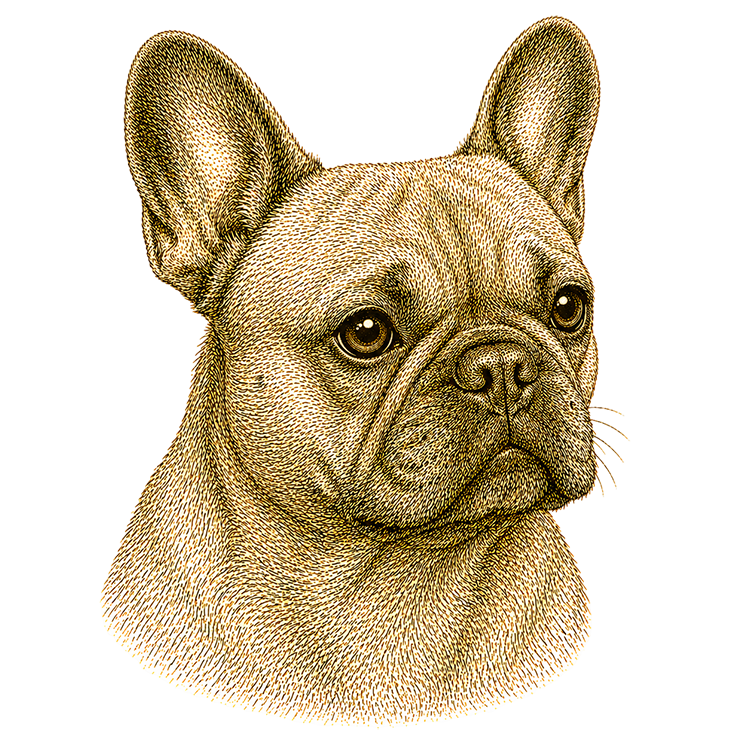
French Bulldog Training & Temperament: Complete Breed Guide
French Bulldogs were bred exclusively as companions. Unlike working breeds developed for specific jobs, Frenchies exist purely for human company — bred to sit on laps, provide warmth, and thrive in small urban spaces during the Industrial Revolution. The modern French Bulldog — whether fawn, brindle, pied, or any of the increasingly common colour variations — still carries that companionship drive, that desire for constant human contact, and that adaptability to indoor living.
This guide is for training French Bulldogs as family companions — which is exactly what they were designed for. But their challenges are very specific: health limitations that affect training methods, a reputation for ‘stubbornness’ that's really just lower motivation, and physical restrictions that require adapted approaches.
Working with a brachycephalic breed requires a highly tailored approach. The flat face that defines the Frenchie also creates breathing difficulties, heat intolerance, and exercise limitations. Training exercise that I would design for a Labrador Retriever — long play sessions, vigorous retrieve games, extended outdoor training — don't work for a breed that can overheat in a matter of minutes in hot weather. The training approach must account for physical realities and the training environment.
French Bulldogs respond well to positive reinforcement training when it's adapted to their capabilities. They're intelligent, emotionally sensitive, and develop deep attachments to their people. But they're also often less food-motivated than many breeds and tire quickly. What looks like stubbornness is often just a dog who's too hot, too tired, or insufficiently motivated. The training approach matters as much as the training itself.
Training approach for French Bulldogs
-
French Bulldogs don’t cope well with pressure. They’re not stoic dogs who push through discomfort or confusion — when training feels confrontational or physically uncomfortable, they disengage. That might look like stubbornness, but it’s usually the dog opting out rather than pushing back. Because of their build and breathing limitations, anything involving physical correction, collar pressure, or forced compliance is not just unhelpful but genuinely risky.
Training works best with Frenchies when it feels collaborative rather than demanding. They’re attentive, socially motivated dogs who respond to clear feedback and rewards, but they’re not wired for urgency or repetition. Asking for too much, too fast tends to produce resistance; breaking things down and keeping sessions light produces far better results.
Frenchies do learn reliably when training is consistent, but progress is often quieter and slower than in high-drive breeds. They’re thinking dogs, not frantic ones. Maintaining trust matters because their motivation is rooted in relationship — once that’s strained, cooperation drops off sharply.
-
French Bulldogs tend to struggle most when everyday life becomes too stimulating. They’re highly people-focused dogs who want to be involved in everything, but they don’t regulate excitement particularly well. Without guidance, that enthusiasm spills out as barging through doorways, frantic greetings, and difficulty settling once something interesting has happened. Training for Frenchies is often less about teaching new skills and more about helping them slow down and cope with transitions.
Toilet training is another area where expectations often clash with reality. Many French Bulldogs take longer than average to become reliable, and that’s not down to stubbornness. Small bladder capacity, immature body control, and a temperament that isn’t strongly driven by praise alone all play a part. Progress tends to come from repetition and routine rather than quick breakthroughs, and setbacks are common even when things seem to be going well.
Social confidence also needs careful handling. French Bulldogs aren’t naturally bold dogs, and their size means they experience the world at a different scale. Noisy environments, unfamiliar dogs, and busy human activity can feel overwhelming if exposure isn’t handled thoughtfully early on. When socialisation is rushed or inconsistent, caution can harden into avoidance or defensive behaviour later.
Training a French Bulldog successfully usually means accepting that progress is steadier and less dramatic than in high-drive breeds. When expectations match the dog in front of you, Frenchies are capable, cooperative companions — but they don’t respond well to pressure, shortcuts, or being treated like smaller versions of more driven dogs.
-
Like all breeds, training a Frenchie puppy from day one is essential, but the approach must be adapted immediately to the their physical realities. French Bulldogs overheat quickly, tire faster than robust breeds, and cannot sustain the 15-20 minute training sessions appropriate for working breeds. From day one, training happens in 3-5 minute bursts, multiple times daily, in cool environments. This isn't a limitation — it's the only safe and effective approach for brachycephalic breeds.
The 8-16 week window remains critical for building confidence and positive associations, but with Frenchies, environmental management matters as much as training content. Temperature, humidity, and time of day determine when training is possible. A Frenchie puppy can't train outdoors in warm weather or after physical activity until they've cooled completely. This shapes the entire training schedule differently than in breeds who can train regardless of conditions.
Foundation work — toilet training, name recognition, basic handling, settling — must start immediately, but finding what motivates them takes longer and can vary from dog to dog. Many Frenchies aren't strongly food-motivated, and discovering what rewards work (specific treats, toys, access to sofas, brief play) requires experimentation.
Formal cue training can begin around 12-14 weeks, but sessions remain short throughout the dog's life. Frenchies don't build duration the way working breeds do. A 5-minute training session at 4 months old might only extend to 8-10 minutes at maturity. Physical limitations don't disappear with age.
Adolescence in French Bulldogs is typically less dramatic than in high-drive breeds. Regression occurs around 6-12 months but tends to be less intense. However, the "stubborn" narrative often intensifies during adolescence — what's actually happening is the dog becoming more selective about when they'll engage, which reflects their companion breed heritage rather than defiance.
For adolescent or adult Frenchies, training can start immediately using the same short-session, temperature-managed approach. Adult Frenchies often have established routines around furniture access, sleeping locations, and household privileges that may conflict with training goals, but they remain capable of learning when training is adapted appropriately.
Q & A
-
One of my favourite expressions is ‘there’s no such thing as a stubborn dog - if they don’t co-operate with you they either don’t understand what you want or they’re not sufficiently motivated to do what you ask’. But it is fair to say that French Bulldogs are selectively motivated! They were bred to live alongside humans, not to take constant direction, and they tend to cooperate when the task makes sense to them or the payoff is clear. That can look like defiance, but it’s usually a motivation issue rather than a training one.
When a Frenchie doesn’t respond, there’s often a practical reason. The reward may not be compelling enough, the environment might be too warm or stimulating, or the dog may simply not be sure what’s being asked. Physical comfort matters more in this breed than many owners realise — heat, fatigue, or breathing effort can shut engagement down quickly. Adolescence also plays a role, with brief regressions that make previously learned behaviours feel unreliable.
Frenchies tend to learn best in short, low-pressure sessions where success comes easily. They respond well when training is broken into small steps, kept light, and adjusted to what actually motivates the individual dog. Some work enthusiastically for food, others for play or physical closeness, and many need variety to stay interested.
What doesn’t help is pushing for repetition once the dog has disengaged. That usually creates frustration on both sides and reinforces the idea that training is something to endure rather than participate in. French Bulldogs aren’t trying to test boundaries — they’re simply opting out when the situation stops working for them.
-
French Bulldogs are brachycephalic. Their shortened skull structure leads to narrowed nostrils, elongated soft palates, and restricted airways. Snoring, snorting, reverse sneezing, and noisy breathing are common, but common does not mean healthy.
Some dogs have breathing difficulties severe enough to require surgical intervention, such as nostril widening or soft palate correction. These procedures are functional, not cosmetic, and can significantly improve quality of life.
Worsening breathing sounds, difficulty breathing during mild activity, blue gums or tongue, collapse, or inability to sleep lying flat require urgent veterinary attention. Brachycephalic Obstructive Airway Syndrome is widespread in the breed.
-
French Bulldogs don’t need a lot of exercise, but they do need it handled thoughtfully. Their build and breathing mean they fatigue quickly and struggle to cool themselves, so exercise is about gentle movement and mental engagement rather than intensity or distance.
Short walks suit them best, especially when conditions are cool. Beyond that, much of a Frenchie’s daily “exercise” is better delivered through indoor enrichment, low-key play, and short training sessions that give their brain something to do without stressing their body. Many enjoy water, but their structure means swimming is risky without supervision and proper support.
Heat management is central to exercising this breed safely. French Bulldogs don’t reliably stop when they’re tired or uncomfortable, and breathing can deteriorate quickly once they overheat. Slowing down, heavy panting, or reluctance to continue are signs to stop, not push through.
Trying to tire a Frenchie out with long walks or vigorous games usually backfires. They’re far more likely to become uncomfortable than fitter. You should be aiming to meet their need for movement and stimulation in a way that keeps them safe and comfortable.
-
French Bulldogs pull on the lead not because they’re badly behaved, but because they’re compact, muscular dogs who move with their whole body. Add excitement and curiosity, and that strength goes straight into the lead. The complication is their breathing. When a Frenchie pulls, they’re also compressing their airway, which is why pulling so often goes hand in hand with heavy panting or noisy breathing. It’s uncomfortable at best and unsafe if it continues.
Loose-lead walking with French Bulldogs needs to be approached as a low-intensity skill, not a stamina exercise. They work best in short bursts, with frequent breaks and plenty of reinforcement for staying close. Expecting them to practise for long stretches usually leads to fatigue before learning has a chance to settle in.
The type of equipment you use is not optional. In the vast majority of cases for most breeds I’d recommend using harness, but with Frenchies it’s mandatory - pressure around the neck makes breathing harder, so lead walking needs to be taught using a well-fitted harness rather than a collar. Keeping sessions calm and physically easy allows the dog to focus on the task instead of coping with discomfort.
Progress with Frenchies is often slower than with high-drive, food-obsessed breeds. They tire quickly, disengage when they’re uncomfortable, and aren’t inclined to push through confusion. With patience and realistic expectations, most do learn to walk more calmly — it just takes consistency and time rather than force or repetition.
-
French Bulldogs often take longer to become reliably toilet trained than many other breeds. It’s common for them to still be inconsistent well past the age when owners expect things to be sorted, sometimes not fully reliable until six to nine months. That delay isn’t about intelligence — it’s about a combination of physical comfort, motivation, and environment.
Their bodies play a role. Small bladder capacity means they need to go more often, and some brachycephalic dogs have slightly weaker bladder control early on. Weather matters too. Cold, wet, or windy conditions are genuinely uncomfortable for many Frenchies, and a dog that’s miserable outside is far less inclined to concentrate on learning where they should go.
Motivation also looks different in this breed. French Bulldogs aren’t typically driven by praise alone, and the abstract idea of “doing the right thing” doesn’t outweigh discomfort. If going outside feels unpleasant, the incentive has to be strong enough to compete with that.
Successful toilet training with Frenchies usually comes from repetition rather than breakthroughs. Very frequent opportunities, clear supervision, and immediate reinforcement help the behaviour click over time. Many owners find that having a temporary indoor option during bad weather reduces stress for everyone and prevents setbacks rather than causing them.
The key is adjusting expectations. French Bulldogs often get there later than other breeds, but slower progress is normal for them. Consistency and patience tend to matter far more than pushing for speed.
-
French Bulldogs don’t usually panic when left alone — but they do notice the change. They’re companion dogs through and through, bred to stay close rather than cope independently, so sudden or poorly handled absences can unsettle them more than people expect.
Where things tend to go wrong with Frenchies is less about emotional distress and more about stress stacking. Heat, breathing effort, excitement, and frustration all interact in this breed. A dog that’s already warm or overstimulated can struggle to settle, and once breathing becomes uncomfortable, calm is hard to recover. That’s why alone time needs to feel physically easy as well as emotionally neutral.
Frenchies cope best when being alone is introduced early and treated as unremarkable. Short, predictable absences build tolerance far more effectively than dramatic routines. Because they’re not built for sustained physical exertion, trying to exhaust them before leaving often backfires — it raises arousal and body temperature rather than encouraging rest.
Most French Bulldogs settle well when the environment is comfortable, expectations are realistic, and alone time is simply part of the day. When a Frenchie does show genuine distress — persistent vocalising, frantic attempts to escape, or an inability to settle even in cool, calm conditions — it’s worth getting help early. In this breed, managing stress isn’t just about behaviour; it’s about physical wellbeing too.
-
French Bulldogs are usually fond of children and enjoy being part of busy household life. The question with this breed isn’t temperament — it’s mechanics. Frenchies are affectionate and tolerant, but their bodies aren’t built for the kind of physical handling that often comes with young kids.
Their structure makes them more vulnerable than they look. Backs are easily strained, joints don’t cope well with repeated impact, and breathing becomes compromised quickly when excitement runs high. A Frenchie being picked up awkwardly, encouraged to jump, or pulled into rough play can be injured even when everyone’s intentions are good.
Excitement is another factor. French Bulldogs don’t regulate arousal or breathing efficiently, so fast, noisy play can push them from happy to uncomfortable very quickly. They often need enforced pauses to settle, especially indoors where movement and noise escalate.
Their size helps in some ways — they’re unlikely to bowl a child over — but it also creates a false sense of sturdiness. Frenchies do best with children who are taught to interact calmly, avoid lifting, and recognise when the dog needs space.
In families where supervision is consistent and handling rules are clear, French Bulldogs can be affectionate, entertaining companions. In homes where children are very young or interactions are hard to manage closely, a more physically robust breed is often a safer fit.
-
French Bulldogs tend to stay close to their people, but that doesn’t automatically translate into reliable recall. Frenchies were selected for companionship rather than responsiveness at distance. Many will come back willingly — but only when there’s a reason that matters to them.
Some Frenchies respond well to food, others to play, attention, or physical closeness, and many lose interest quickly if the reward doesn’t compete with what’s happening around them. Expecting consistent recall without understanding what your individual dog values often leads to frustration.
Environment plays a bigger role than many owners realise. French Bulldogs are physically vulnerable: they can’t move quickly away from danger, they overheat easily, and they’re not equipped to cope if they wander into trouble. Because of that, recall training tends to go hand-in-hand with sensible management rather than replacing it.
Most Frenchies develop usable recall in familiar, contained spaces where distractions are predictable. In new or busy environments, reliability often drops, and that’s normal for the breed. For French Bulldogs, recall is less about achieving perfection and more about building a habit of choosing to stay nearby — with thoughtful boundaries where safety matters.
-
French Bulldogs aren’t typically confrontational dogs. Most are sociable, people-focused, and quite tolerant. When a Frenchie reacts sharply, it’s rarely about temperament and much more often about discomfort or feeling trapped.
Because of their size and physical limitations, Frenchies don’t have many options when something worries them. They can’t easily move away, they don’t cope well with pressure, and they’re often physically uncomfortable without it being obvious. Snapping is sometimes the quickest way they have to create space when something feels wrong.
Pain is a particularly important piece of the puzzle in this breed. Ongoing issues with skin, ears, spine, or joints are common, and behaviour can change subtly when a dog is sore. A Frenchie who suddenly objects to handling or reacts when touched is often communicating discomfort rather than a behavioural shift.
Guarding behaviour can also appear, especially around food or favourite items, but it tends to be situational rather than ingrained. How people respond matters — tension and confrontation usually make things worse, not better.
Any sudden or escalating behaviour in a French Bulldog should prompt a health check - your first port of call should be the vet before any assumptions are made. With this breed especially, behaviour and physical wellbeing are closely linked, and addressing the underlying issue often resolves the behaviour without heavy-handed training interventions.
-
French Bulldog socialisation works best when it’s slow, contained, and deliberately low-key. Their size and physical limitations mean they process the world differently from more robust breeds, and long or intense outings tend to do more harm than good. With Frenchies, confidence is built in moments rather than marathons.
Short, regular exposures are far more effective than extended sessions. A few minutes watching the world go by, then leaving while the dog is still comfortable, does more for long-term confidence than staying until they’re tired or overwhelmed. Fatigue and discomfort shut learning down quickly in this breed.
Scale matters. Traffic, crowds, unfamiliar dogs, and noisy environments can feel overwhelming simply because everything is closer and louder at ground level. Allowing extra distance isn’t avoidance — it’s appropriate exposure. Calm observation from further away still teaches the dog that the world is safe.
Interactions with other dogs need particular care. French Bulldogs are physically vulnerable and don’t cope well with rough or chaotic play. They can’t easily escape if things get too much, so choosing calm, size-appropriate dogs and controlled settings is far safer than relying on group play to “build confidence.”
Arousal is the biggest threat to good socialisation. Once excitement or stress climbs, breathing becomes harder and the experience turns negative. Ending sessions early, keeping environments predictable, and prioritising gentle handling and calm observation all support confidence far better than pushing through discomfort.
For French Bulldogs, effective socialisation isn’t about covering as much ground as possible. It’s about creating repeated, manageable experiences that leave the dog feeling safe rather than stretched. That approach produces far more stable, confident adults than trying to match the pace or intensity used for sturdier breeds.
-
Training French Bulldogs works best when it’s built around cooperation rather than pressure. They respond well to reward-based methods that make sense to them and feel physically comfortable. Their motivation tends to come from social contact, curiosity, and carefully chosen rewards, rather than sheer drive or repetition.
Sessions need to be short and unhurried. Frenchies tire quickly and disengage as soon as they become uncomfortable, especially if they’re warm or breathing heavily. Pushing on past that point doesn’t build resilience — it just teaches the dog to opt out next time. Progress is often slower than with more driven breeds, but it’s usually steady when expectations are realistic.
Individual motivation matters more than sticking to a formula. Some French Bulldogs enjoy food, others prefer play or physical closeness, and many need variety to stay interested. Training only works when the dog feels able to participate, so paying attention to breathing, temperature, and fatigue is part of the process.
Consistency still matters, but it has to be flexible. A Frenchie who’s overheated, overtired, or struggling physically isn’t being difficult — they’re simply not in a position to learn. Successful training with this breed comes from adjusting the plan to the dog, not trying to push the dog to fit the plan.
-
Foundation work (toilet training, name recognition, basic handling, settling) begins immediately -ideally around 8 weeks - but temperature and time of day determine when training is possible. Frenchie puppies cannot train outdoors in warm weather or after physical activity until fully cooled. This shapes the training schedule differently than breeds who can train regardless of conditions.
Finding motivation often takes longer than in food-obsessed breeds. Many Frenchies aren't strongly food-motivated. Discovering what rewards work (specific treats, toys, sofa access, brief play) requires experimentation during early weeks. This isn't stubbornness — it's a companion breed that wasn't selected for eager-to-please responsiveness.
Formal cue training can begin around 12-14 weeks, but sessions remain short throughout the dog's life. Frenchies don't build duration the way working breeds do. A 5-minute session at 4 months might only extend to 8-10 minutes at maturity. Physical limitations don't disappear with age.
Adolescence typically runs 6-12 months — less dramatic than high-drive breeds but still brings regression. The "stubborn" narrative often intensifies during this period as the dog becomes more selective about when they'll engage.
Adult Frenchies can start training immediately using the same short-session, temperature-managed approach. They remain capable of learning when training adapts to physical limitations rather than forcing endurance they don't have.
Is a French Bulldog right for you?
-
You want a companion dog who thrives on human contact and doesn't need extensive exercise. French Bulldogs are lap dogs who want to be with you constantly. If you want an active hiking companion, a Frenchie isn't right.
You can provide climate-controlled living environments. Frenchies cannot tolerate heat. They need air conditioning in summer and heating in winter. If you can't provide temperature control, this breed will suffer.
You're prepared for significant health costs. French Bulldogs are expensive to own. Veterinary bills are higher than most breeds. Insurance is essential and premiums are high. If you can't afford ongoing healthcare costs, don't get a Frenchie.
You understand and accept the ethical concerns around brachycephalic breeds. French Bulldogs are structurally compromised. Their health problems are predictable consequences of breeding for extreme features. Responsible ownership means accepting these realities.
You live in an urban environment suited to small dogs. Frenchies are ideal for flat living if climate-controlled. They don't need gardens. They adapt well to city life.
-
You want an active outdoor companion. French Bulldogs can't hike, can't exercise in heat, and tire quickly. If you want a dog for active outdoor lifestyle, choose a different breed.
You live in a hot climate without air conditioning. Frenchies suffer and die in heat. This isn't manageable through "being careful" — they need climate control.
You want a naturally obedient, eager-to-please dog. Frenchies are intelligent but selectively motivated. If you want instant obedience, choose a working breed.
You can't afford high veterinary costs. Frenchies are expensive to own. Health problems are common and often require specialist treatment. If budget is tight, choose a healthier breed.
You want a dog who can be left alone for 8+ hours daily. Frenchies are companion dogs who struggle with isolation. If your lifestyle requires long absences, choose a more independent breed.
You want to support ethical breeding. The French Bulldog as currently bred has significant welfare problems. If you're uncomfortable with the ethical implications, consider healthier breeds or don't get a dog.
If you're in Brighton and Hove and want structured guidance for training your French Bulldog, my Puppy Foundation and Teen Reset programmes can help. Or check out my free Puppy Primer or Terrible Teen Survival guides for a practical starting point.